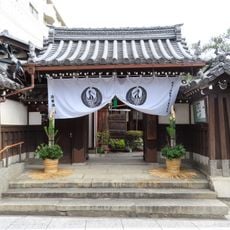
Yasaka Kōshin-dō Temple, Buddhist temple in Higashiyama district, Kyoto, Japan
Yasaka Kōshin-dō is a Buddhist temple in the Higashiyama district of Kyoto, distinguished by walls covered with colorful fabric balls called kukurizaru. These bright elements create patterns across the building and form the temple's most visible and recognizable feature.
The temple began in 960, when the Tendai monk Jōzō Kisho (887–946) enshrined a Shōmen Kongō image brought from the continent and linked to the Hata clan, so that ordinary people could worship it. This Kōshin-dō is described as Japan's first Kōshin hall and first Kōshin pilgrimage site. During the Edo period it was a branch temple of Shitennō-ji in Osaka; the main hall was rebuilt in 1679.
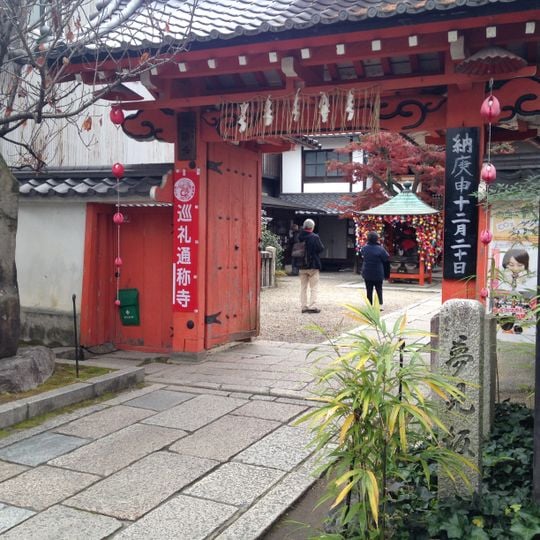
The cloth balls hung at the temple are called kukurizaru, monkey figures with hands and feet bound, expressing the Kōshin teaching that desires must be restrained for wishes to be granted. Visitors buy them, write a wish, and hang them on the Binkōrō-dō hall. On Kōshin days the temple holds konnyaku-taki, in which three konnyaku cut in monkey shapes are eaten in silence facing north for good health.
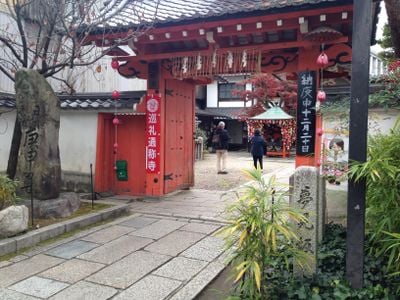
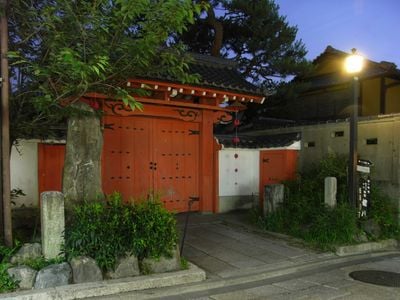
The temple stands on Shimokawara-dori, just below the Yasaka torii, a short walk from Hōkan-ji and its pagoda, Kōdai-ji and Kiyomizu-dera. The nearest station is Keihan Kiyomizu-Gojō, about 24 minutes on foot. The gate with its vermilion doors and hanging bell opens onto a compact precinct, so the main hall and the monkey-covered hall are seen in a few minutes.
The cloth balls are called kukurizaru: monkeys with hands and feet bound, hung in the Binko-dō hall as messengers of Kōshin-san. Worshippers write a desire on one and hang it up, symbolically giving up that wish so another may be granted. The temple is counted among Japan's three great Kōshin halls, with Shitennō-ji in Osaka and the former Irino Kōshin-dō in Tokyo.
The community of curious travelers
AroundUs brings together thousands of curated places, local tips, and hidden gems, enriched daily by 93,172 contributors worldwide.