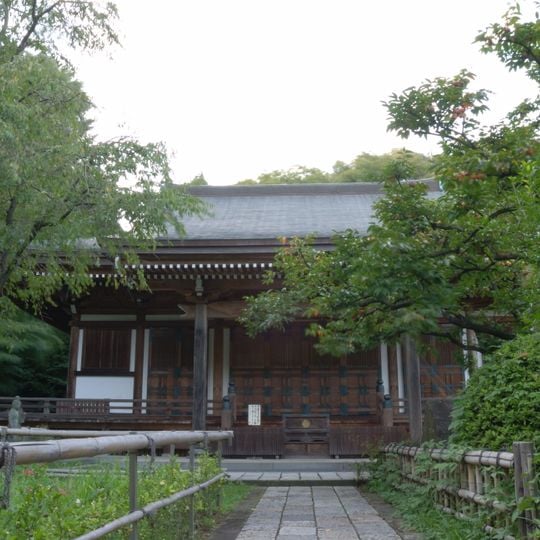
Ōsen-ji Temple, Buddhist temple in Asao-ku, Japan
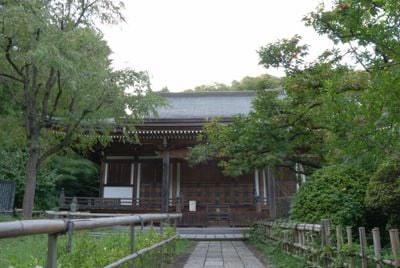
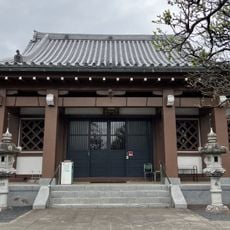
Ōsen-ji is a Shingon temple whose single-story main hall has a dark timber frame, white plaster panels, a central section of vertical slats and latticework, and a recessed entry. A wide gray tiled roof with a horizontal ridge sits above a white frieze with dark square brackets. A small white sign with Japanese characters hangs near the doorway, and trees surround the building behind a low wooden rail.
The temple was founded in 757 during Emperor Kōken's reign and received its official name in 917. Over the centuries, the site developed into a major center of the Shingon Buddhist school.
The temple is known for the Zenjimaru persimmon, a sweet variety said to be Japan's oldest cultivated sweet persimmon. The monk Tōkai found the original tree growing wild in the hills while searching for timber to rebuild the temple and encouraged nearby farmers to cultivate it. The original tree, registered as a national monument, still stands in the grounds.
The site is most easily reached by city bus from Kakio Station South Exit to the Ozenji-Higashi-3-chome stop, followed by a short walk. Access is straightforward and well-signposted for visitors.
The temple crest is the three-leaf hollyhock (aoi), granted by the Tokugawa shogunate; the temple held memorial tablets for Tokugawa Ieyasu and the thirteen successive shoguns. A horse-racing track once stood on the grounds, and the area is still called Baba, meaning horse ground.
The community of curious travelers
AroundUs brings together thousands of curated places, local tips, and hidden gems, enriched daily by 94,740 contributors worldwide.