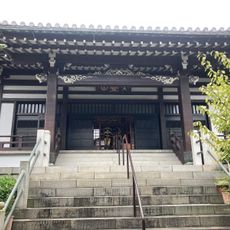
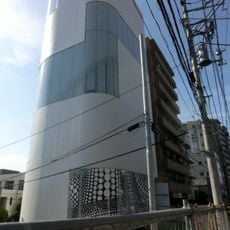
Yarai Nōgaku-dō, Traditional Noh theater in Yaraicho district, Tokyo, Japan
Yarai Nōgaku-dō is a theater building in Yaraichō with a square stage that has three open sides and a painted pine tree on the back wall. The simple wooden construction follows classical Noh architecture, creating an intimate space where the audience sits close to the performers.
Kanze Kiyoyuki opened a stage in Kanda-Nishikogawa-chō in 1908; it burned in the 1923 Great Kantō earthquake. In 1930 he rebuilt it in Yaraichō, but an air raid on 24 May 1945 destroyed it again. After the war, Kanze Yoshiyuki II obtained cypress from imperial forest land and completed the present stage in 1952. It was registered as a Tangible Cultural Property in 2011.
The Kanze Kyūkokai performs its monthly regular recitals here, twelve a year, plus separate spring and autumn programmes that sometimes move to the National Noh Theatre. The Kanze school of Yaraichō, led today by Kanze Yoshimasa, also stages the Waketake-kai for young performers twice a year and the beginner-oriented Nōnō performances with commentary on weekday evenings. The Konparu school's Enman'i-kai rents the stage for its Tokyo recitals.
The hall is in Yaraichō, near Kagurazaka Station. Seating is fixed chairs at the front, side and centre blocks, with old-style tatami box seats kept behind the front and side rows; capacity is 300. A shop selling Noh goods is in the lobby and a tea room in the basement. The Kanze Kyūkokai holds its regular performances about twelve times a year, with extra spring and autumn shows.
The stage's mirror board, the kagami-ita, was painted by Kawabe Kikuhisa with a pine and bamboo motif. The hall is also credited as the first Noh theatre to install fixed seating, and its audience area mixes chair seats with old-style tatami box seating at the rear.
The community of curious travelers
AroundUs brings together thousands of curated places, local tips, and hidden gems, enriched daily by 93,483 contributors worldwide.