Saishō-ji, Buddhist temple in Enoki-chō, Japan
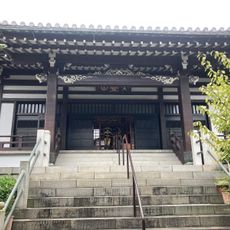
Saishō-ji is a Rinzai-shū Myōshin-ji school temple in Enoki-chō, Shinjuku, with the mountain name Inryō-zan. Its grounds hold a main hall, the grave of Soshin-ni, a zazen hall called Daigodō, a Kannon hall, a tea house and Hōō pond. A stone monument marks the site of the former garden Fukōen, now a parking lot.
Saishō-ji was founded in 1646, when shōgun Tokugawa Iemitsu granted land at the site of Ōhashi Ryūkei's former residence in Ushigome for a temple built for Soshin-ni, a woman who served him. Iemitsu named it by combining the ji of Rinzai Zen patriarch Linji with the matsu of the Matsudaira family. It was destroyed repeatedly by fire in the Hōreki era, by the Meiji-era haibutsu kishaku movement and by World War II air raids, and rebuilt each time.
The temple is named after the characters for Rinzai Zen patriarch Rinzai Zenji (sai) and the Matsudaira family (shō), chosen by Tokugawa Iemitsu. Soshin-ni, a woman who served Iemitsu, is buried here, and her grave remains on the grounds. The temple belongs to the Myoshin-ji branch of Rinzai Zen.
The grounds are not open to the public; visits require a reservation made in advance. The temple is about an 8-minute walk from exit 2 of Kagurazaka Station on the Tozai subway line, or a 3-minute walk from the Ushigome Hoken Center-mae bus stop on the Toei Shira 61 route.
The temple's name combines the ji of Rinzai Zen patriarch Linji with the matsu of the Matsudaira family, chosen by shogun Tokugawa Iemitsu himself. Iemitsu, who funded the temple for the nun Soshin-ni, said his heart would remain at Saishō-ji after his death. A stone monument in the grounds recalls the Pukō-en garden, a celebrated landscape lost in the Meiji Restoration and now a parking lot.
The community of curious travelers
AroundUs brings together thousands of curated places, local tips, and hidden gems, enriched daily by 93,935 contributors worldwide.