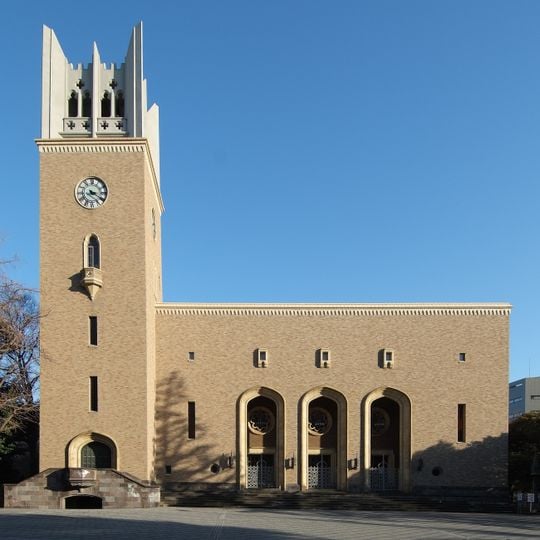
Ōkuma Auditorium, Gothic auditorium at Waseda University Campus, Japan
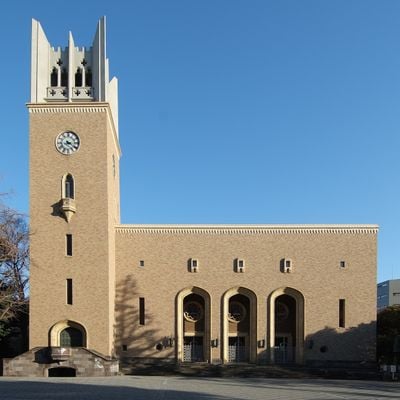
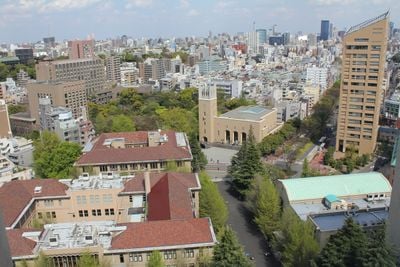
Ōkuma Auditorium is a Gothic-style building on the Waseda University campus in Totsuka, Japan. The structure rises three floors above ground with one basement level and includes a 37.8-meter (124-foot) clock tower featuring pointed arches, tracery windows and stone buttresses.
Waseda founder Ōkuma Shigenobu died in January 1922, and the university planned a memorial hall, raising about ¥2,000,000. The 1923 Great Kantō earthquake halted the project until 1925. Kōichi Satō, Takeo Satō and Tachū Naitō designed it; Toda Corporation built it from February 1926 to October 1927. It was renovated in 2006–2007 and designated an Important Cultural Property on 4 December 2007.
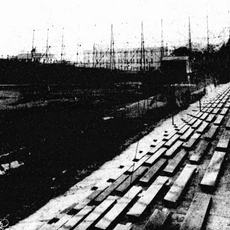
The hall is named for founder Ōkuma Shigenobu, who died in 1922; before it existed, university ceremonies were held in tents in the courtyard. Its bells, shipped from Baltimore, still ring the Westminster chime six times daily at 8:00, 9:00, 12:00, 16:00, 20:00 and 21:00. In 1946 it hosted the retirement sumo ceremony of sekiwake Kasagiyama Katsuichi, a Waseda graduate.
The main hall seats more than 1,100 people and combines modern audiovisual equipment with restored original elements. Visitors reach the complex through the central university campus and should allow extra time for orientation during events.
The tower's four bells were shipped from the MacLean Company of Baltimore across the Panama Canal, the first four-bell set in Japan. They still ring the same harmony as the Palace of Westminster, chiming six times daily at 8:00, 9:00, 12:00, 16:00, 20:00 and 21:00.
The community of curious travelers
AroundUs brings together thousands of curated places, local tips, and hidden gems, enriched daily by 93,248 contributors worldwide.