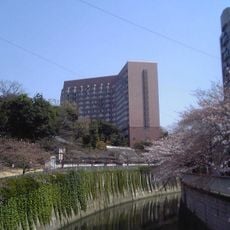
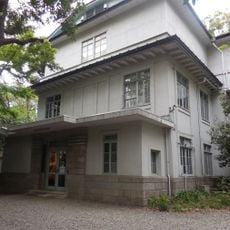
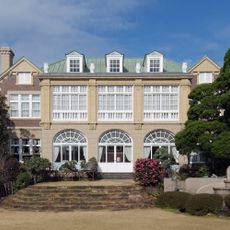
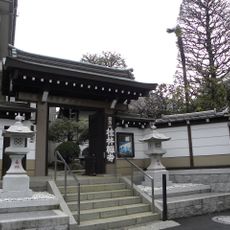
Sekiguchi Bashōan, Literary residence in Sekiguchi, Tokyo, Japan.
Sekiguchi Bashōan is a traditional residence in Tokyo with a pond fed by natural spring water that flows through the grounds. The structure showcases classic Japanese residential design and garden layout from centuries past.
In 1677 Matsuo Bashō took a clerical job recording labourers for a canal-diversion works supplying water to the Mito domain residence. He lived near the site until 1680, and followers later built the Ryūin-an hermitage there. A Bashō Hall was added in 1726, and in 1750 his own handwritten tanzaku was buried as the Samidare mound. The site became a Tokyo metropolitan historic site in 1926; the present buildings are post-war reconstructions.
The residence is tied to the celebrated poet Matsuo Bashō and shows how Japan valued poetry during the Edo period. Visitors can observe how the garden served as a space for literary inspiration and creative thinking.
The residence is not open every day, so visitors should check current opening hours before planning a visit. Comfortable walking shoes are useful since the grounds have multiple sections to explore, including the garden areas.
In 1750, on the 33rd anniversary of Bashō's death, his followers buried one of his own handwritten tanzaku slips on the grounds and named the spot Samidare-zuka, the "early-summer rain mound"; it served as a memorial grave. The main gate is normally kept closed, and visitors enter through a side door.
The community of curious travelers
AroundUs brings together thousands of curated places, local tips, and hidden gems, enriched daily by 94,583 contributors worldwide.