Isoma Rock Shelter Site, Archaeological site in Japan
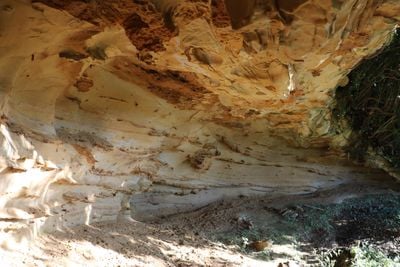
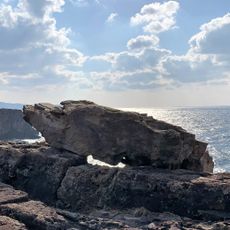
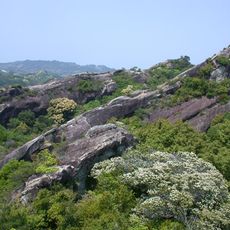
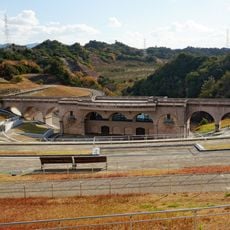
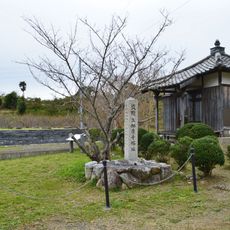
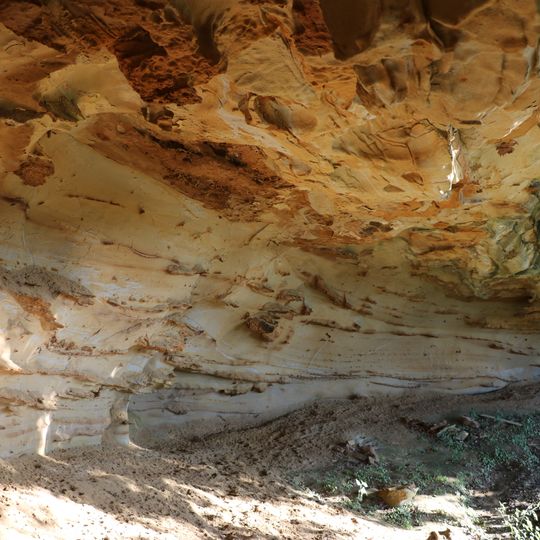
The Isoma Rock Shelter Site is a natural rock formation in Tanabe, measuring about 23 meters wide and 5 meters deep, carved into a sandstone hill about 20 meters tall. The shelter displays a simple, rugged structure with stone walls where archaeologists discovered pottery, bone, tools, and burial chambers dating from the 5th to 7th centuries.
The site was discovered in November 1969 and is recognized as a National Historic Site of Japan. Its burials and artifacts date to the late Kofun period, from the 5th to 7th centuries, a time when early Japanese culture was developing.
The site's name reflects the natural rock formation that drew people for millennia. It shows how ancient communities connected with the land and how fishing and coastal resources shaped their way of life.
The site is easy to reach, about 10 minutes by car from Kii-Tanabe Station. There are no facilities at the shelter itself, but visitors can walk around and explore the natural surroundings while imagining life in ancient times.
Eight stone chambers inside held about 13 human remains, with bones of an elderly man and an infant positioned facing each other. This unusual arrangement hints at burial practices different from modern customs and offers insights into ancient relationships and rituals.
The community of curious travelers
AroundUs brings together thousands of curated places, local tips, and hidden gems, enriched daily by 90,803 contributors worldwide.