Jinko-in Temple, Buddhist temple in Kita-ku, Kyoto, Japan
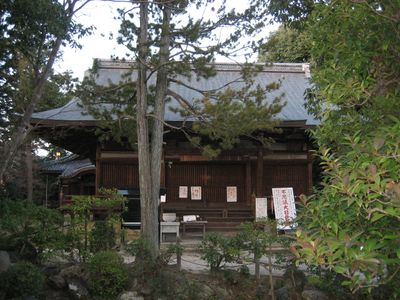
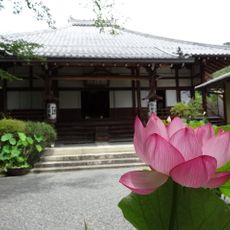
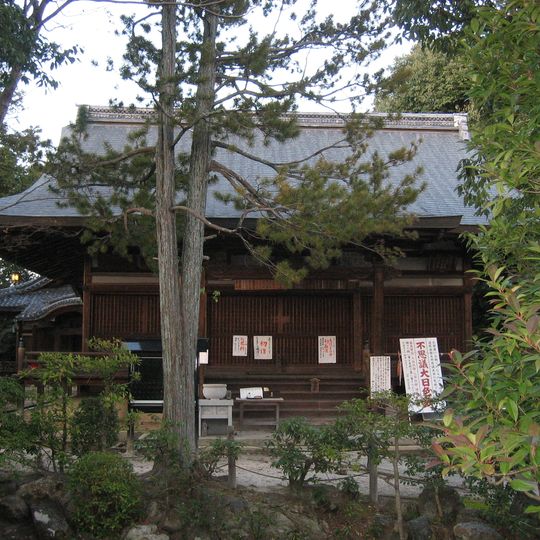
Jinko-in is a single-storey wooden temple in Kita-ku, Kyoto, its broad dark grey tiled roof overhanging a facade of vertical dark wood slats, with a raised wooden floor and central steps. A white horizontal beam band runs above the woodwork, and four white signs with dark text are mounted to the right of the entrance. Two tall, rough-barked trees stand before the left portion.
Founded in 1217 when the priest Keien was invited from Yamato by Matsushita Yoshihisa, a shrine official of Kamigamo Shrine, following an oracle. Before that the site housed roof-tile makers serving the imperial palace and was called Kawaraya-dera. Kukai is said to have trained here for ninety days at age 42. The halls burned in the Tenpo era (1830–1843); the temple was abolished in the early Meiji period and restored in 1878 by the monk Wada Gesshin.
The temple's name comes from a divine oracle: the priest Matsushita Yoshihisa was told to build a hall where a sacred light shone. Locals call it "Nishi-Kamo no Kobo-san," and each late July it holds the "kyuri fuji" rite, in which Kobo Daishi's power to seal epidemics in cucumbers is invoked against illness.
The temple is open to visitors and can be reached on foot from the surrounding streets of Kita-ku. Since it is an active place of worship, quiet and respectful behavior is expected throughout the grounds.
The temple name comes from the oracle received by the Kamo Wakeikazuchi Shrine priest Matsushita Yoshihisa in 1217, who was told to build a hall where a divine light shone. Before that, the site housed roof-tile makers serving the Kyoto Imperial Palace and was called Kawaraya-dera, the "tile-roof temple".
The community of curious travelers
AroundUs brings together thousands of curated places, local tips, and hidden gems, enriched daily by 93,665 contributors worldwide.