Akita Castle, Historic fortification in Akita, Japan
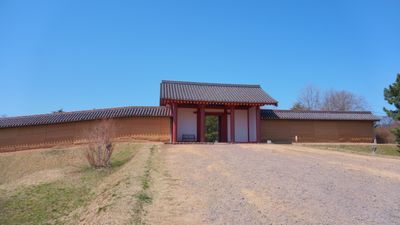
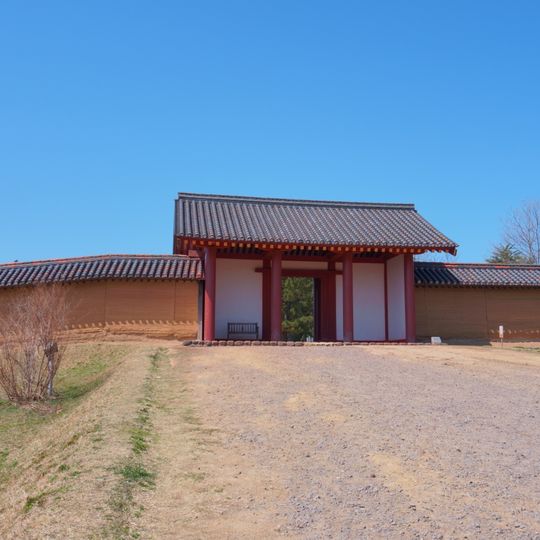
Akita Castle is an excavated fortification in Akita with foundations and reconstructed buildings from early medieval Japan. The site displays a rectangular arrangement within multiple defensive walls that contained government offices and residential structures.
In 733 the Dewa Barrier was moved from the Shōnai region to the Takashimizu hill in Akita, and by around 760 it was called Akita Castle. It served as the northernmost fort of the imperial court, housing the Dewa deputy governor from the 9th to 11th centuries. It was damaged by the 830 earthquake, sacked during the Gangyō Disturbance of 878, and abandoned around 1050.
The name Akita Castle replaced the earlier Dewa Barrier around 760, when a document dated 19 March 760 already calls it "Ashita Castle". The site later became Takashimizu Park, and the Akita Prefectural Gokoku Shrine was moved onto the castle grounds. Excavations in the Unoki area southeast of the walls found regularly spaced large post-built structures and a flush toilet; some researchers interpret them as a guest house for foreign envoys rather than a temple.
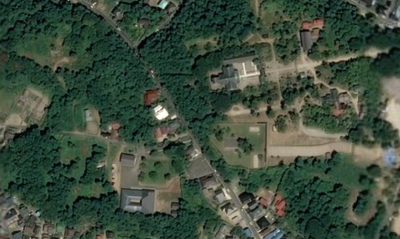
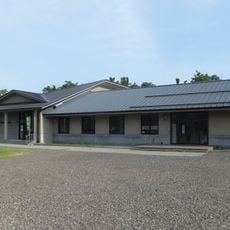
The site lies on a low hill in the Takashimizu area of western Akita, near the right bank of the Omono River mouth. Part of the former castle grounds is now Takashimizu Park, and the Akita Prefectural Gokoku Shrine stands on the castle site. Reconstructed structures sit on their original foundations, so the layout can be followed on foot.
Excavations at Akita Castle yielded wooden tally boards and documents on varnished paper, along with ceramic roof tiles. These finds show the administrative and diplomatic activity of the fortress, which served as the northernmost outpost of the imperial court and a reception point for Balhae envoys.
The community of curious travelers
AroundUs brings together thousands of curated places, local tips, and hidden gems, enriched daily by 94,903 contributors worldwide.