Kamayama Shrine, Shinto shrine in Wakayama Prefecture, Japan
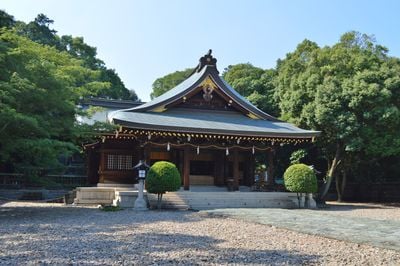
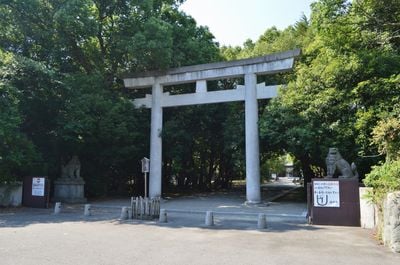
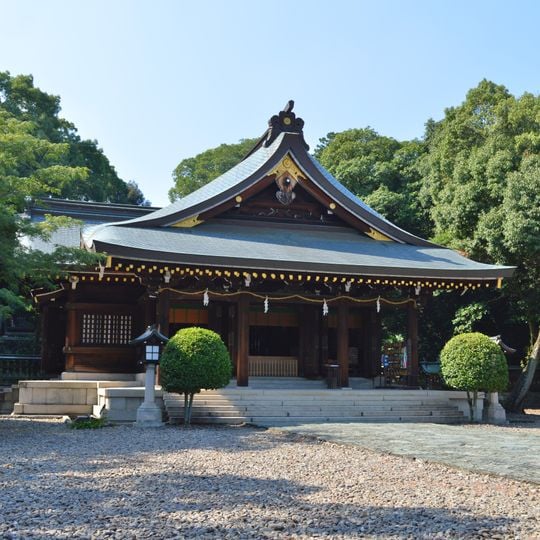
Kamayama Shrine is a Shinto shrine in Wakayama, Japan, built in the Kasuga-zukuri style. Its wooden hall has a dark gray roof that curves upward at the ends, with a gold-colored circular emblem beneath the gable peak. White zigzag paper streamers hang below the eaves, and a short flight of stone steps leads to the entrance. A large stone torii gate stands on the paved approach.
The shrine appears in the Engishiki records of 927 and was served by the hereditary Ukai priestly family from at least 1381. Toyotomi Hideyoshi's forces destroyed it in 1585; Asano Yoshinaga rebuilt a small shrine in 1600, and Tokugawa Yorinobu sponsored the honden in 1669. In 1915 it became the only shrine promoted from village shrine to the highest rank, kanpei-taisha.
The shrine takes its name from Kamayama, the place named in the Kojiki and Nihon Shoki where Itsuse no Mikoto was buried. Until the Meiji era the Ukai family passed the priesthood down hereditarily, tracing itself to the fisherman Nihotsu no Ko of the Kojiki. Today the shrine is the middle stop of the "three-shrine pilgrimage" (sansha mairi) with Hinokuma and Kunikakasu Jingu and Itakiso Shrine, all within Wakayama city.
The shrine is a ten-minute walk from Kamayama Station on the Wakayama Electric Railway Kishigawa Line. The tomb mound lies behind the main hall on a hill about nine meters high; excavation is prohibited because the Imperial Household Agency administers it as an imperial tomb. The precinct covers 34,979 square meters.
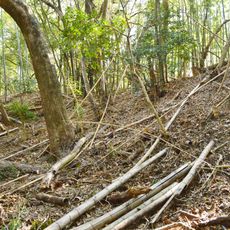
Behind the main hall stands the Kameyama Tomb, a circular kofun about 6 meters across and 1 meter high on a hill rising some 9 meters. The Imperial Household Agency has designated it as the tomb of Itsuse no Mikoto, so excavation is prohibited. Records note that three guard households, the Ukai, Kino and Kasano families, once tended it.
The community of curious travelers
AroundUs brings together thousands of curated places, local tips, and hidden gems, enriched daily by 94,431 contributors worldwide.