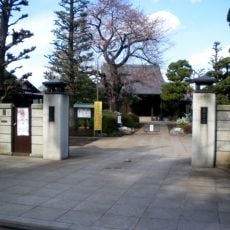
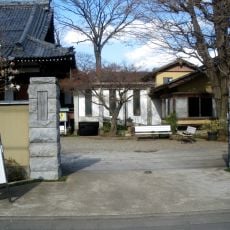
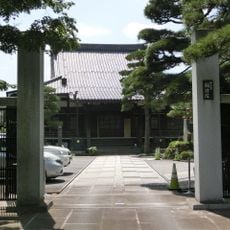
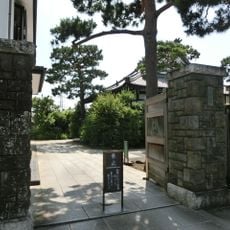
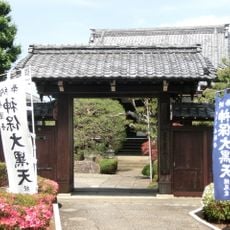
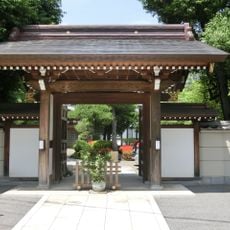
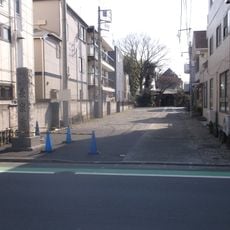
Dairokuten jinjya, Shinto shrine in Suginami-ku, Tokyo, Japan
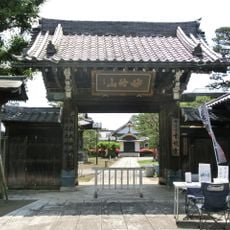
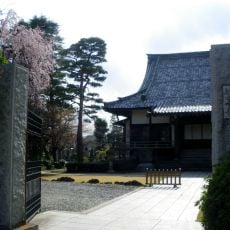
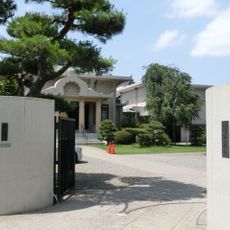
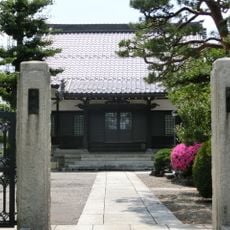
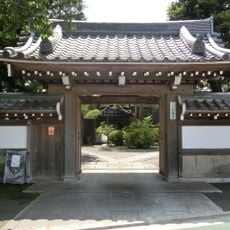
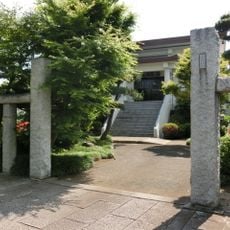
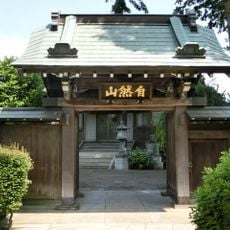
Dairokuten jinjya is a Shinto shrine in Takaiido-nishi, Suginami-ku, Tokyo. Its wooden main hall, rebuilt in 1856, stands behind a hall rebuilt in 1881; in 1972 a reinforced-concrete shelter and offering hall were added and the shrine buildings were moved back for the Chuo Expressway. Two pairs of komainu guard the approach, the older pair dated 1771.
The shrine's founding date is unknown but is thought to date to the Kamakura period; a 1559 document records the place name Takai-dō. The main hall and worship hall burned down during the Tenpō era (1830–1843), and the current main hall was rebuilt in 1856. In 1972 the buildings were moved back and a reinforced-concrete hall was added for the central freeway.
The shrine's name changed at the Meiji separation of Buddhism and Shinto: it once honoured the sixth heaven's ruler, Hajun, and was renamed for Omodaru and Ayakashikone, the sixth generation of the divine age. The annual festival falls on 10 September; until around 1965 villagers kept an all-night vigil in the hall after the harvest, and rain-making kagura dances were held into the early Showa years.
The shrine is about an 11-minute walk from Takaito Station on the Keio Inokashira Line. Entry to the grounds and the worship hall is free. The main festival is held on September 10.
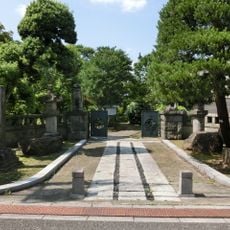
Two pairs of stone komainu stand between the torii and the worship hall. The nearer pair dates from 1917, while the farther pair was carved in 1771, before the old shrine buildings burned down; that older pair is a cultural property designated by Suginami Ward.
The community of curious travelers
AroundUs brings together thousands of curated places, local tips, and hidden gems, enriched daily by 94,431 contributors worldwide.