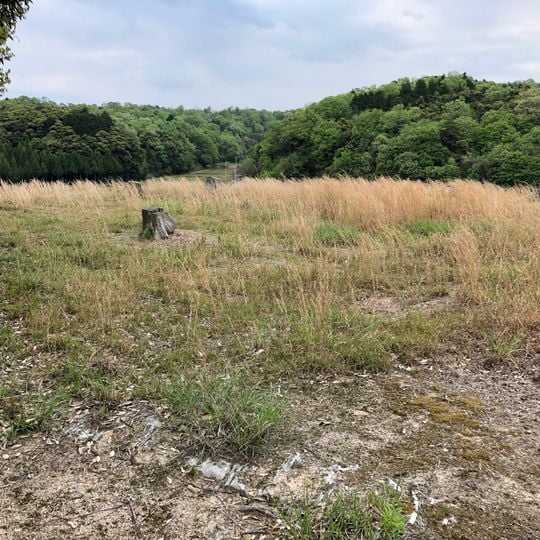
Akasakaimai Tumuli, Ancient burial site in Mineyama, Japan
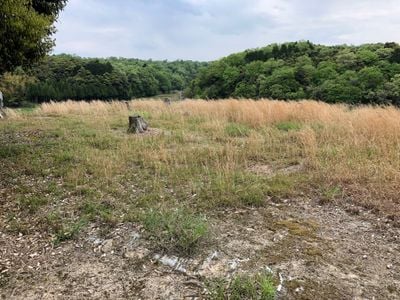
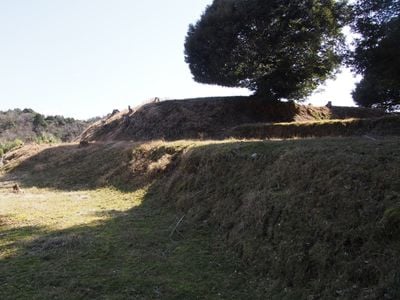
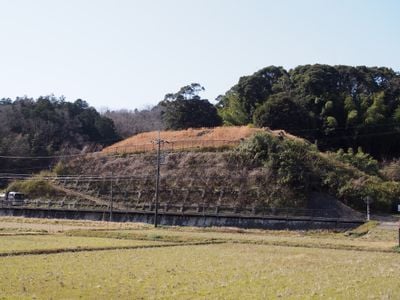
Akasakaimai Tumuli is a late Yayoi period burial mound in the Mineyama neighborhood of Kyōtango, Kyoto. It is a truncated pyramid-shaped mound with a base of 39 m north-south by 36 m east-west and a height of 4 m, topped by a flat surface of 27 m by 25 m. Six burials are on the summit and 19 around the base, of which eleven have been fully excavated.
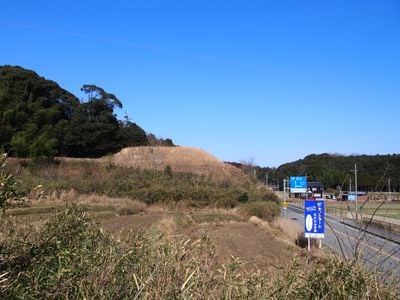
The mound was found during widening of Kyoto Prefectural Road No. 17, when a square platform thought to be part of Muromachi-period Imai Castle proved to be a late Yayoi burial mound. Excavations ran from 2000 to 2003; the site was designated a National Historic Site on 26 July 2007.
The name comes from the hamlet names Aka-saka-koaza Kebi and Imai. Finds show wide contacts: pottery from the Ikoma foothills of Kawachi or the Kagawa Sanuki plain, a lidded jar from the Tokai to Kanto region, and glass beads coloured with Han blue pigment. The ornaments and pottery are Kyoto Prefecture designated cultural properties, kept at the Tango Kodai no Sato museum.
The mound stands on a hill ridge above a narrow valley near the confluence of the Fukuta and Takeno Rivers, about ten minutes by car from Mineyama Station on the Kyoto Tango Railway. Kyoto Prefectural Road No. 17 runs past the site, whose route was altered to keep the mound in place. Excavated finds are kept at the Tango Ancient Village Museum.
The fourth burial, cut into the first grave, held a headdress and pendant earring still on the wearer: jasper and glass beads, over 30 green glass magatama and beads coloured with Han blue and Han purple pigment from mainland China. The coffin floor was lined with vermilion made from cinnabar mined in Ise.
The community of curious travelers
AroundUs brings together thousands of curated places, local tips, and hidden gems, enriched daily by 94,261 contributors worldwide.