Nata-dera Temple, Buddhist temple in Komatsu, Japan
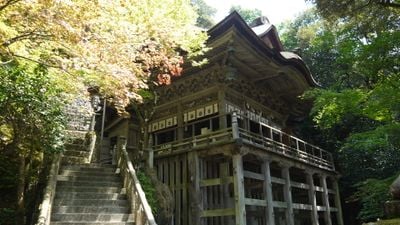
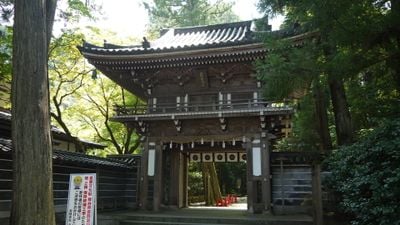
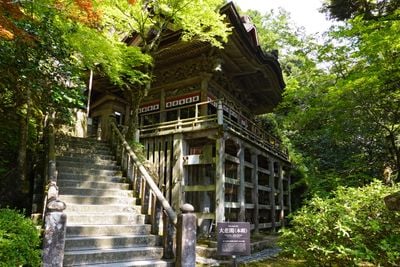
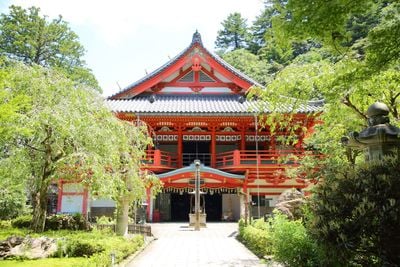
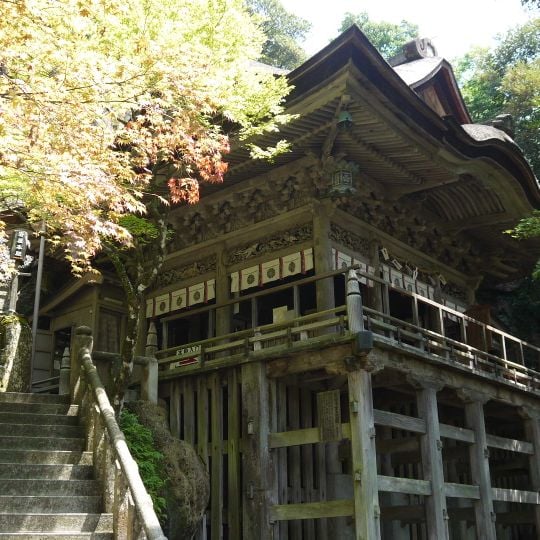
Nata-dera is a Kōyasan Shingon-shū temple in Komatsu, Ishikawa Prefecture. Its main hall, the Daihikaku, is built against a rock face without a roof, with a portico and a persimmon-bark awning; the three Important Cultural Property buildings (worship hall, Karamon gate, and main hall) form the Hondō. A two-storey wooden gate with a tiled roof and a white-railed balcony stands at the entrance.
A monk founded the site in 717 and brought religious teachings to the region. Wars damaged the compound later, until a local ruling family rebuilt it in the early 17th century.
The name Nata-dera was chosen by the cloistered Emperor Kazan, who took one kanji from the names of the first temple of the Saigoku Kannon pilgrimage, Nachi, and the thirty-third, Tanigumi. The hibutsu Senjū Kannon is shown every 33 years; it was displayed in 2017 for the temple's 1300th anniversary and again in September 2026 to mark its designation as a Komatsu City Cultural Property.
The temple is about 15 minutes by car from Kagaonsen Station on the Hokuriku Shinkansen and IR Ishikawa Railway, and about 10 minutes from Iburihashi Station. From Komatsu Station or Awazu Station, take the Hokutetsu Kaga bus Awazu line to the Nata-dera stop, then walk south about 6 minutes. The gate is open from 9:15 to 16:00.
A statue with a thousand arms remains hidden behind closed doors almost always and is shown to the public only once every 33 years. The last opportunity was in 2017, when the site marked its 1300th year of existence.
The community of curious travelers
AroundUs brings together thousands of curated places, local tips, and hidden gems, enriched daily by 93,464 contributors worldwide.