鍋屋上野浄水場, Water purification plant in Chikusa-ku, Nagoya, Japan.
The Nabeya Ueno Water Purification Plant in Chikusa-ku, Nagoya, is the city's first waterworks, completed in March 1914. It has two treatment lines: a slow sand filtration system fed by gravity from the Torii-matsu settling pond in Kasugai, and a rapid filtration system installed in 1934. Its maximum daily capacity is 290,000 cubic metres.
Nagoya's first water purification plant was begun in May 1910 and completed in March 1914, with supply starting that September. Slow sand filtration drew Kimotsuki River water via the Torii-matsu settling pond in Kasugai; a rapid filtration system was added in 1934. A 1987–1998 renewal added the main building and equipment block, reaching a maximum daily capacity of 290,000 cubic metres.
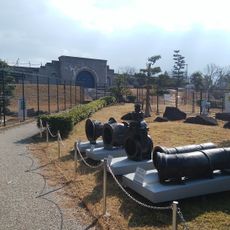
The former First Pump Station, in use from 1914 to 1992, was built with British-made bricks in a European classical style combined with Baroque elements. It was selected for the Modern Water Supply 100 in 1985, designated a Nagoya City Urban Landscape Important Building in 1989, and became a Nagoya City Tangible Cultural Property in 2012.
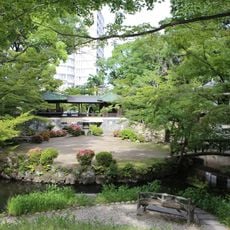
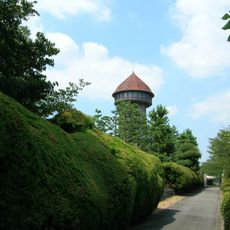
The plant grounds are normally closed to visitors, but one day each June during Water Week the site opens part of its grounds for the Sui Festa event. The adjacent Sui no Oka park, at the site's highest point, looks over the settling basins. The Tenma greenway's artificial stream, modeled on the Kiso River, runs along the old water conduit toward the Higashiyama distribution station.
The slow-sand filter beds were rebuilt from 14 to 12 basins between June 2010 and December 2013, keeping the same total area and treatment capacity while adding earthquake resistance. The plant's maximum daily output is 290,000 cubic metres.
The community of curious travelers
AroundUs brings together thousands of curated places, local tips, and hidden gems, enriched daily by 94,712 contributors worldwide.