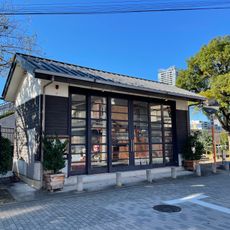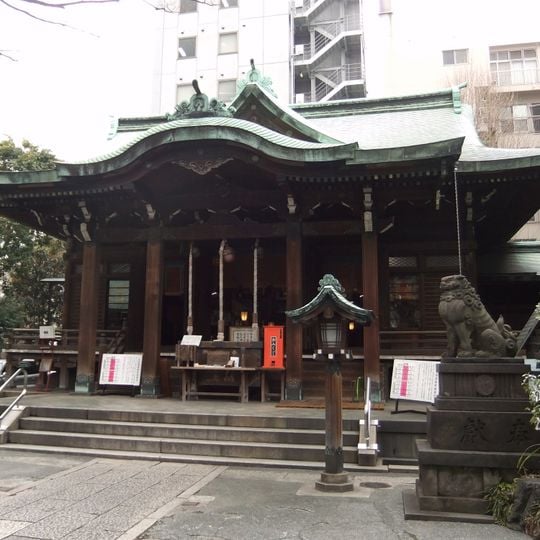
Teppōzu Inari Shrine, Inari shrine in Chūō, Tokyo, Japan
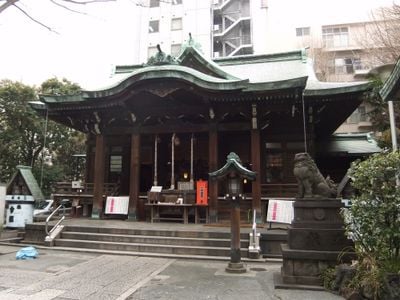
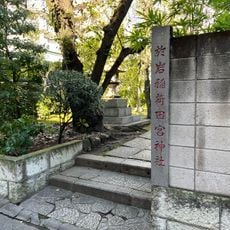
Teppōzu Inari-jinja is a Shinto shrine in the Chūō-ku district of Tokyo, Japan. It occupies a small plot in an urban block and follows the classic layout of an Inari shrine, with a torii gate, a stone-paved approach, a purification basin, and a main hall for prayers.
Founded in 841, when residents of Sakurada in Ebara District enshrined Inari as their tutelary deity, the shrine moved with the reclamation of the inlet and was relocated to its present site in 1868. The 1923 Great Kantō earthquake caused severe damage, and the main hall and kagura hall were rebuilt from 1935. It survived the 1945 Tokyo air raids, retaining its early-Shōwa form.
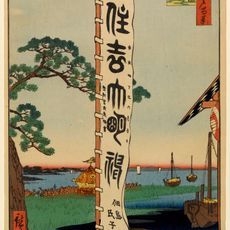
The shrine's name was recorded as Minato Shrine in the late Edo period, and ukiyo-e artist Utagawa Hiroshige depicted it in his One Hundred Famous Views of Edo under the title "Teppozu Inari Bridge Minato Shrine." The parish covers 17 neighbourhood associations, including parts of Ginza; the Kabukiza and Shimbashi Enbujo theatres belong to it. The Yayoi Society, founded in 1998, revived the portable-shrine procession.
The shrine sits in a dense urban neighborhood in Chūō-ku and is easy to reach on foot from nearby metro stations. Before entering the main area, it is customary to rinse your hands at the purification basin, and speaking quietly near the hall is expected.
In the grounds stands the only Fujizuka in Chūō Ward, built in 1790 from Mount Fuji lava, with a small Sengen shrine on its 5.4 m summit. It was moved four times within the precincts, in 1870, 1874, 1885, 1928 and 1936, and can be climbed only on 1 July, when the mountain season opens.
The community of curious travelers
AroundUs brings together thousands of curated places, local tips, and hidden gems, enriched daily by 93,580 contributors worldwide.