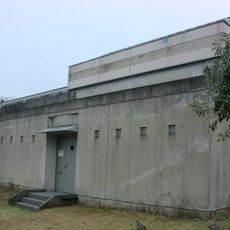
長寿寺, Buddhist temple in Kumamoto, Japan
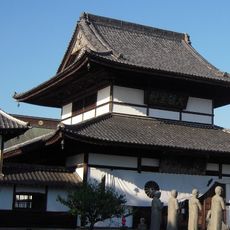
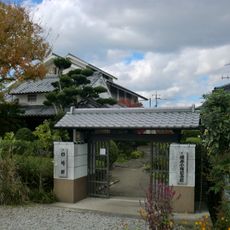
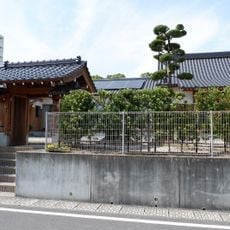
Chojuji, known as Kihara Fudo, is a Tendai temple in the Kihara district of Tomiai, Minami Ward, Kumamoto. Its roughly 6,600-square-metre grounds hold a Niomon gate with two guardian figures about nine shaku tall, a main hall bearing a plaque inscribed "Gankaisan" by Hosokawa Okifumi of Uto, a Kannon hall with standing and seated Kannon statues, a Daishido, a bell tower, a kuri and a small shoin. Behind the halls are three waterfall sites used for ascetic practice and the Mitarai pond, sacred to Benzaiten.
Founded by Dengyō Daishi Saichō during the Enryaku era (782–806), the temple was once a major centre of Buddhist learning. Minamoto no Tametomo, who built a fortress on Mount Kihara in the 12th century, venerated its Fudō statue. Minamoto no Yoritomo restored the halls in the Bunji era and donated 18 chō of paddy land. Konishi Yukinaga confiscated the estates, but Katō Kiyomasa later restored the temple; after haibutsu kishaku in the Meiji Restoration it was revived by relocating Uto's Gokurakuji.
The temple belongs to the Tendai school and is a branch temple of Enryaku-ji on Mount Hiei. Its popular name, Kihara Fudo, comes from the main image, a standing Fudo Myoo said to have been carved by Saicho. The statue is called Mizuhiki Fudo after a legend that it drew water into parched rice fields; on the 28th of each month it is shown from its cabinet.
The temple stands at 2040 Kihara, Tomiai, Minami Ward, Kumamoto; from the Kihara Fudo-mae bus stop it is a five-minute walk of about 380 metres. From Uto Station on the Kagoshima Main Line a taxi takes about ten minutes. Extra buses run on 28 February for the spring festival.
The temple's mountain name, Gankaizan ("Geese-Returning Mountain"), comes from a legend about Minamoto no Tametomo, who built a fort on the hill behind the temple and shot geese in flight with his bow; afterwards the geese were said to detour around the mountain. The main image is called Mizuhiki Fudō because, during a drought, water is said to have risen in the dried paddies after villagers prayed, leaving mud stains on the statue's feet.
The community of curious travelers
AroundUs brings together thousands of curated places, local tips, and hidden gems, enriched daily by 94,032 contributors worldwide.