Asagaya Shinmei-gū, Shinto shrine in Asagaya-kita, Tokyo, Japan
Asagaya Shinmei-gū is a Shinto shrine located in the Asagaya-kita neighborhood of Tokyo. The grounds feature a main hall, auxiliary buildings, and a maintained courtyard where visitors enter to offer prayers and make offerings.
Tradition dates its founding to around 1190, when a local landowner named Yokoi Hyōbu brought a sacred stone back from Ise Jingū and enshrined it here; that stone, said to be a stone rod, is still the go-shintai. The Edo-period guide Edo Meisho Zue instead credits a shrine built by villagers at the old site, now called O-Ise no Mori. In 1874 the shrine merged with Hie and Kitano shrines as Tenso Jinja, and in 1990 it took back the name Shinmei-gū.
The shrine's name was changed to Tenso-jinja in 1874 after merging three shrines, then restored to Shinmei-gu in 1990. It distributes lace bracelet charms called Kamu-musubi since 2015 and embroidered goshuin seals called Yamato-gasane since 2019, the first of their kind.
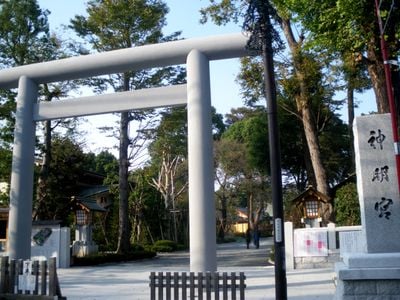
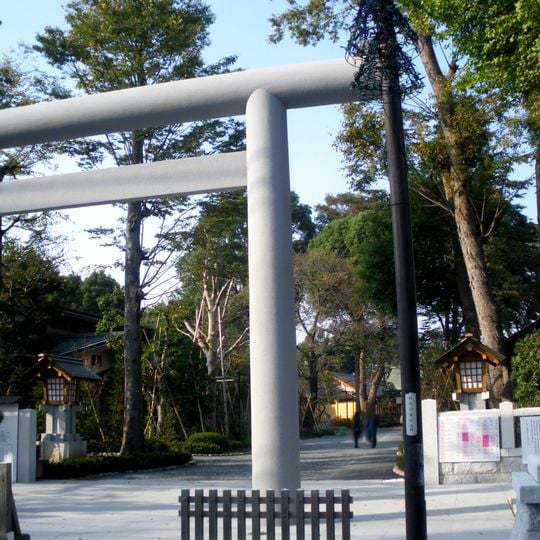
The shrine stands in Asagaya-kita, a short walk from Asagaya Station on the JR Chuo Line. Enter through the large stone torii, whose right pillar is partly hidden by a dark cylindrical pole in front of it; a wooden fence and stone sign sit below the opening. The 2009 renovation added a new prayer hall and a Noh stage.
The shrine performs the Hachinan-yoke prayer, which it states is offered nowhere else in Japan; it is said to remove misfortunes tied to age, direction, fire, water and human affairs. Since 2015 it has distributed "Shin-musubi", a lace bracelet charm first devised in autumn 2014, with seasonal limited models added in later years.
The community of curious travelers
AroundUs brings together thousands of curated places, local tips, and hidden gems, enriched daily by 94,244 contributors worldwide.