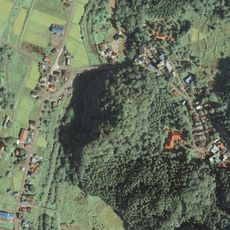
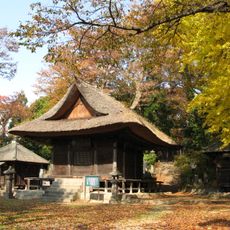
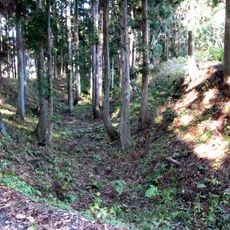
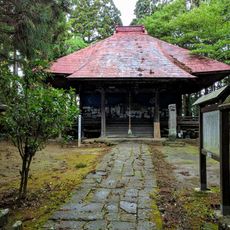
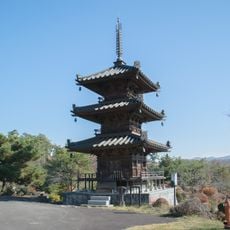
願成寺, Buddhist temple in Kitakata, Japan.
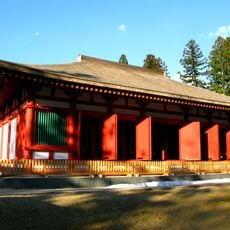
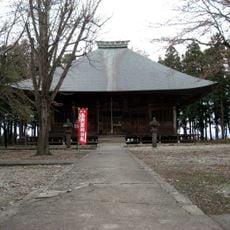
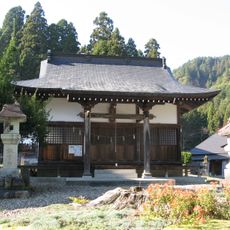
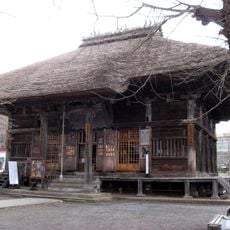
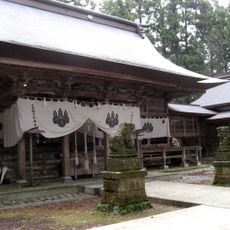
Ganseiji is a Jodo-shu temple in Kitakata, Fukushima Prefecture, founded in 1227 and moved to its present site after the 1611 Keicho Sanriku earthquake. Its main hall was built in 1665 by Gyoyo, and its two-storey gate, finished in 1698, mixes Zen and Japanese styles with carvings on the beams. The Amida Hall holds the Aizu Daibutsu, a Kamakura-period seated Amida flanked by Kannon and Seishi.
Ganseiji was founded in 1227 by the monk Ryūkan, a senior disciple of Hōnen, the founder of the Jōdo school, and became the head temple of the Tanen-gi branch. In 1611 the Keichō Sanriku earthquake destroyed the original site, and the temple was moved to its present location. It is said to have been the only temple in the Aizu region patronised by the Aizu Matsudaira family.
The temple keeps objects linked to the Heike refugees who fled to this area, including paintings used to mourn Emperor Antoku and the Heike dead at Dan-no-ura. A biwa said to have belonged to the founder Ryūkan is still played during the Jūya-e, when episodes of the Tale of the Heike are performed.
The temple stands in Kitakata, Fukushima Prefecture, and is known for the Aizu Daibutsu, a Kamakura-period Amida triad in the Aizu Daibutsu hall. The main hall was built in 1665 by Gyoyo, and the two-storey gate dates from 1698. The Gyōja-dō rite of the Twenty-Five Bodhisattvas is held on the third and ninth days of the Jūya-e, ten days and nights around 10 October.
The temple keeps a biwa said to have belonged to the founder Ryūkan, and it is still played during the Jūya-e, when passages of the Tale of the Heike are performed. Paintings of a white dragon and a black dragon were made after the 1611 Keichō Sanriku earthquake and tsunami, as a prayer that such disasters never recur.
The community of curious travelers
AroundUs brings together thousands of curated places, local tips, and hidden gems, enriched daily by 93,750 contributors worldwide.