高田寺, Buddhist temple in Kitanagoya, Japan
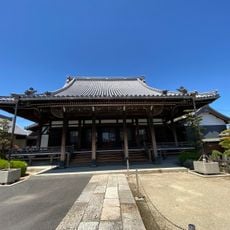
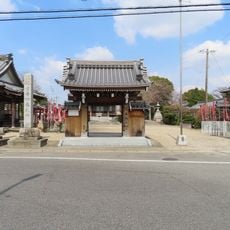
Kōdenji is a Tendai temple in Kitanagoya whose main hall, a 5-bay-square irimoya building with cypress-bark roofing, is a designated Important Cultural Property. The hall enshrines a seated wooden Yakushi Nyorai, 76 cm tall, and four small Enkū carvings. A bell tower, a 1693 hōkyōintō pagoda and a 1925 gate stand in the grounds.
Founded in 720 by Gyōki, according to temple tradition, Kōdenji became a Tendai temple after Saichō visited during his travels through eastern Japan around 806–810. Its main hall was rebuilt between the late Kamakura and early Muromachi periods, and in the Muromachi era the grounds held a seven-hall complex with twelve cloisters and sixteen branch temples. In 1525 a bell was moved here from Gifu, and in 1586 it was transferred to Nagoya's Banshōji.
The temple belongs to the Tendai school, not Soto Zen, and its name is read Kōdenji while the surrounding district is read Takadaji. It is the 21st stop on the Tōkai Forty-Nine Yakushi pilgrimage. Four Enkū sculptures are kept in the main hall because Enkū received esoteric teachings here.
The temple stands in Takadaji, Kitanagoya, north of Nagoya, with a car park east of the main hall; a 75-tonne water tank was built beneath it in 2024 as part of a national disaster-prevention project. The main hall and the wooden Yakushi Nyorai statue are both Important Cultural Properties, and the statue is normally kept hidden, so view the hall from outside. The grounds also hold a bell tower named for world peace and a 1693 stone tower.
The temple name is read Kōdenji, while the surrounding district of the same name is read Takadaji. The main hall enshrines four statues by the monk Enkū, who received esoteric teachings here. The temple bell, moved from a Gifu shrine in 1525, was later transferred to Nagoya's Banshōji in 1586 and recast in 1947.
The community of curious travelers
AroundUs brings together thousands of curated places, local tips, and hidden gems, enriched daily by 94,567 contributors worldwide.