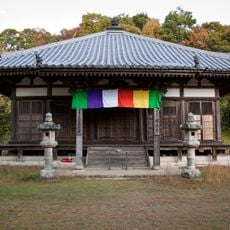
Manshouji, Buddhist temple in Ono, Japan.
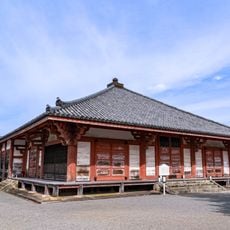
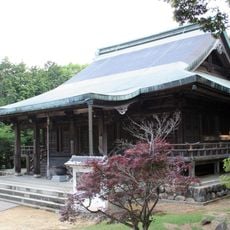
Manshouji is a Shingon Buddhist temple of the Daikakuji school in Ono, Hyogo Prefecture, with the mountain name Hatagawa-san. Its grounds contain a main hall (hondo), an Amida hall, a Kannon hall and a practitioner's hall (gyoja-do), along with two sub-temples, Kongoin and Saikoin. The temple is the seventh stop on the Harima Eight Yakushi pilgrimage.
The medieval Harima topography Hōshōki records the temple as Kari River Temple (加里川寺), and the 1712 Wakan Sansai Zue gives the name Shukagawa-san Mankatsu-ji. Sub-temples Kongō-in and Saikō-in stand in the grounds; Enju-in merged into Kongō-in on 15 June 1907, and Henmyō-in moved to Shiota in Arima District on 23 October 1900.
Manshouji is the seventh stop on the Harima Hachi Yakushi pilgrimage circuit, a route of temples dedicated to the healing Buddha Yakushi. The temple also keeps a wooden Amida statue designated a Hyogo Prefecture cultural property on 24 August 1963, and a throne of Emperor Komei.
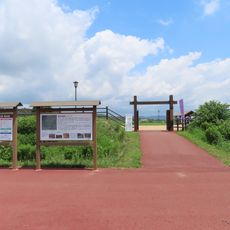
The temple stands in Ono, Hyogo Prefecture, and its stone steps lead directly down to the Onoko Meridian Park, which lies on the 135th meridian east and holds a stone sundial monument. Across the road from the steps is a soba shop called Manshouji Soba. The grounds contain the main hall, an Amida hall, a Kannon hall and a practitioner hall.
The temple's stone steps lead straight down to the Onoko Meridian Park, which sits on the 135th meridian east and holds a stone sundial monument. Across the road stands a soba shop called Manjoji Soba. The temple is also the 7th stop on the Harima Eight Yakushi pilgrimage.
The community of curious travelers
AroundUs brings together thousands of curated places, local tips, and hidden gems, enriched daily by 93,233 contributors worldwide.