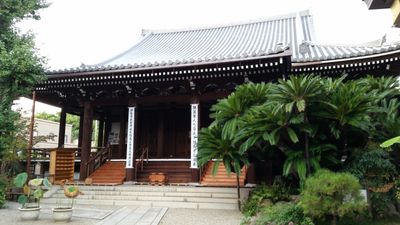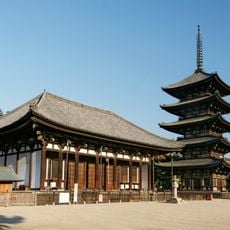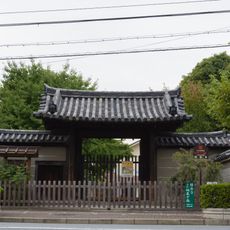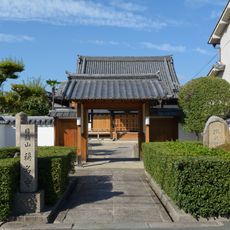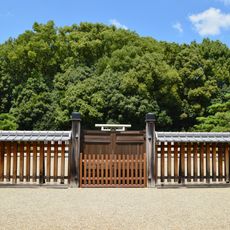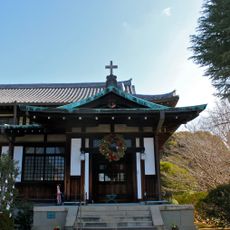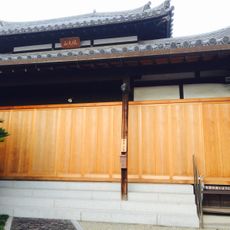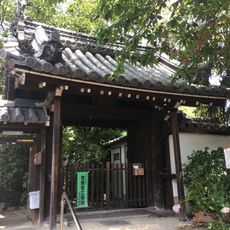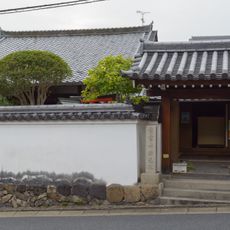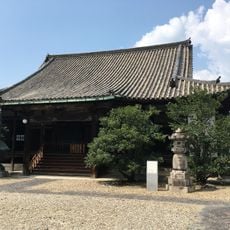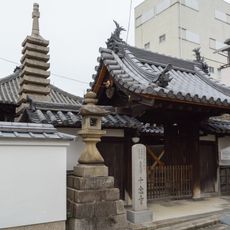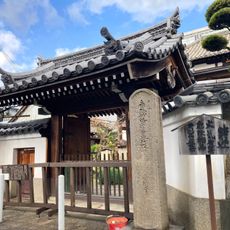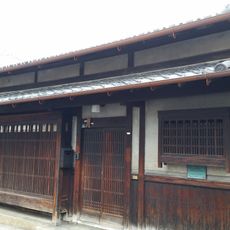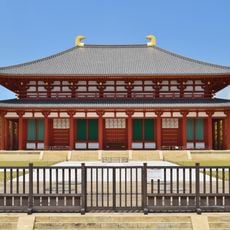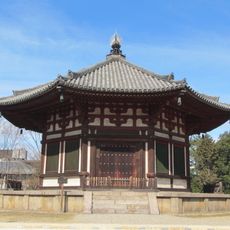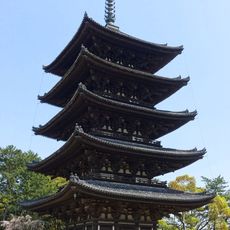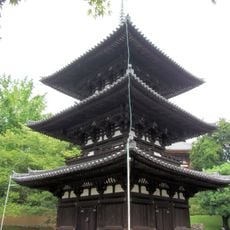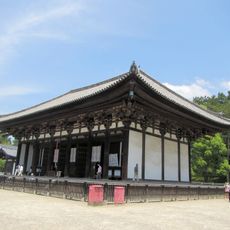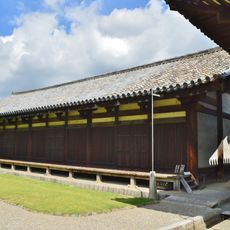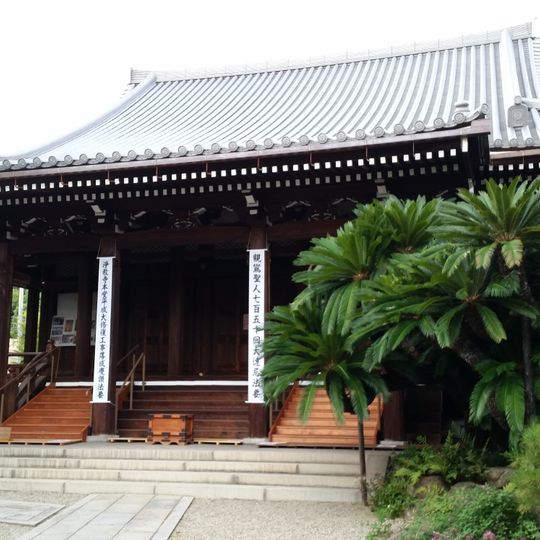
Jōkyō-ji, Buddhist temple in Nara, Japan.
Jōkyō-ji is a Buddhist temple in Nara featuring traditional wooden architecture with sloped roofs and ornamental exterior details set within a garden landscape. The buildings connect through pathways that lead visitors past viewing areas and outdoor spaces designed to frame the natural surroundings.
The temple was founded in 1244 by Buddhist monk Gyōnen during Japan's Kamakura period, an era of significant religious and artistic development. The architectural style and spatial organization from this founding period have remained largely intact over the centuries.
The temple serves as a place where visitors can observe daily Buddhist practices and devotional activities in a working religious space. The layout of the buildings creates natural pause points that encourage contemplation as you move through the grounds.
Visitors enter through the main gate and follow pathways that guide them between the various buildings within the complex. Wearing comfortable shoes is advisable, and it is helpful to allow time for a leisurely visit to explore all areas at your own pace.
The temple's buildings display precise proportional relationships visible in both the wooden carpentry and their spatial arrangement, reflecting mathematical principles from medieval Japanese craftsmanship. This attention to detail is part of why the complex has earned recognition as a registered tangible cultural property.
The community of curious travelers
AroundUs brings together thousands of curated places, local tips, and hidden gems, enriched daily by 91,748 contributors worldwide.