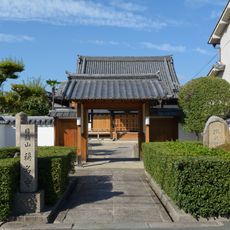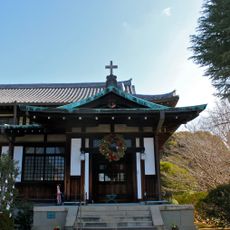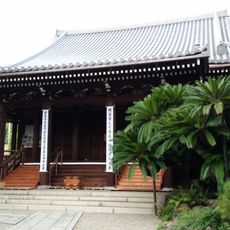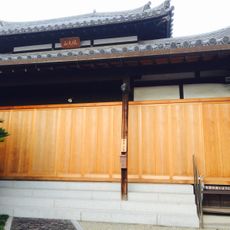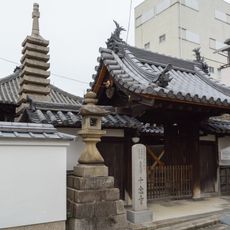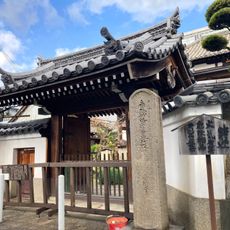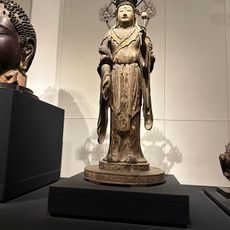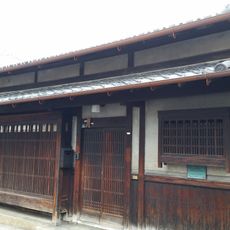
Nenbutsujiyama Kofun, Imperial mausoleum in Nara, Japan
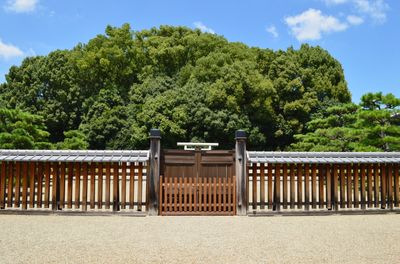
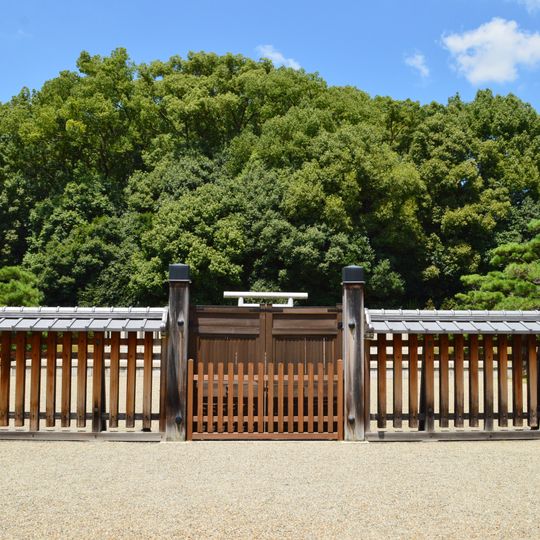
Nenbutsujiyama Kofun is a burial mound in Nara with a distinctive keyhole shape, where a square front section connects to a circular rear portion. The mound rises prominently from the Nara landscape and displays the typical design of these early tomb monuments.
This burial mound was constructed in the 5th century during a period when the Yamato realm was consolidating power across larger parts of Japan. The building of this monument marks a phase when centralized authority became visible through such grand constructions.
This burial mound served as a resting place for rulers, who were interred with precious objects meant to accompany them in the afterlife. The practice reflects how people in ancient Japan understood the ruler's connection to the spiritual world.
You can view this protected burial site from designated viewing areas, as the Imperial Household Agency restricts access to preserve the structure. It is important to respect the boundaries and use only the officially permitted areas.
Excavations show that small terracotta figures called haniwa were once placed around the mound's perimeter. These figures marked sacred boundaries and had ceremonial roles in the burial practices of that era.
The community of curious travelers
AroundUs brings together thousands of curated places, local tips, and hidden gems, enriched daily by 91,745 contributors worldwide.