Glomfjord power station, Heritage power station in Glomfjord, Norway
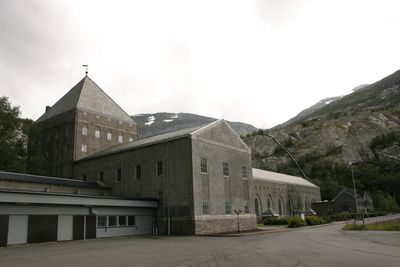
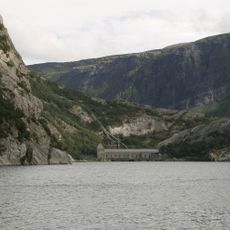
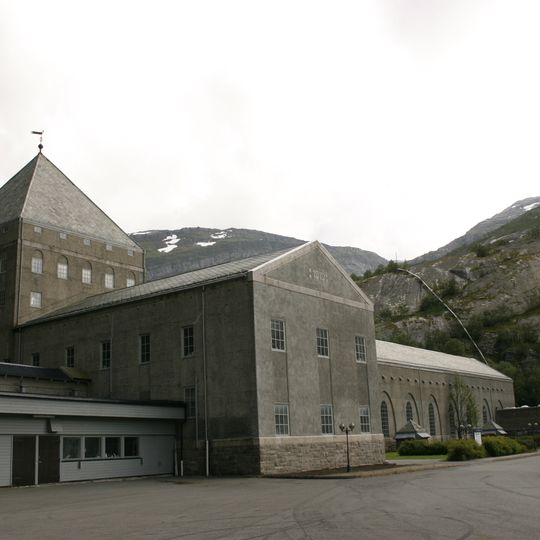
The Glomfjord power station is a hydroelectric facility built from red brick and granite, stretching about 103 meters along the edge of the Navervatn reservoir at roughly 465 meters elevation. The complex holds six Pelton turbines, of which three are currently operated with generators to harness falling water and produce electricity.
The power station began operations in 1920, designed from the start to convert water from the mountains into electricity. A third turbine was added shortly after to keep pace with the region's growing need for power.
The power station displays both industrial purpose and architectural craftsmanship, with large arched windows that flood the machine hall with natural light. The brick and granite structures feel like a statement about how engineers of that era connected industry with the natural landscape.
Keep in mind that this is a working industrial facility, so access to certain areas may be restricted for safety reasons. The best time to visit is during the summer months when the weather is more stable and mountain roads are easier to navigate.
During World War II, the station became the target of an Allied commando raid that damaged its pipes and turbines, disrupting German plans for aluminum production in the area. This event remains part of local history today, even though no visible traces of the physical damage remain.
The community of curious travelers
AroundUs brings together thousands of curated places, local tips, and hidden gems, enriched daily by 90,829 contributors worldwide.