Białowieża National Park, National park in Podlaskie Voivodeship, Poland
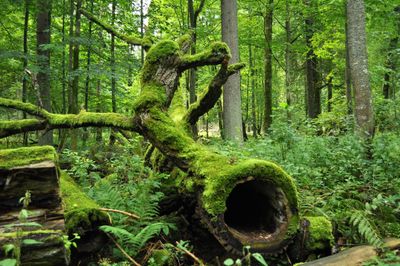
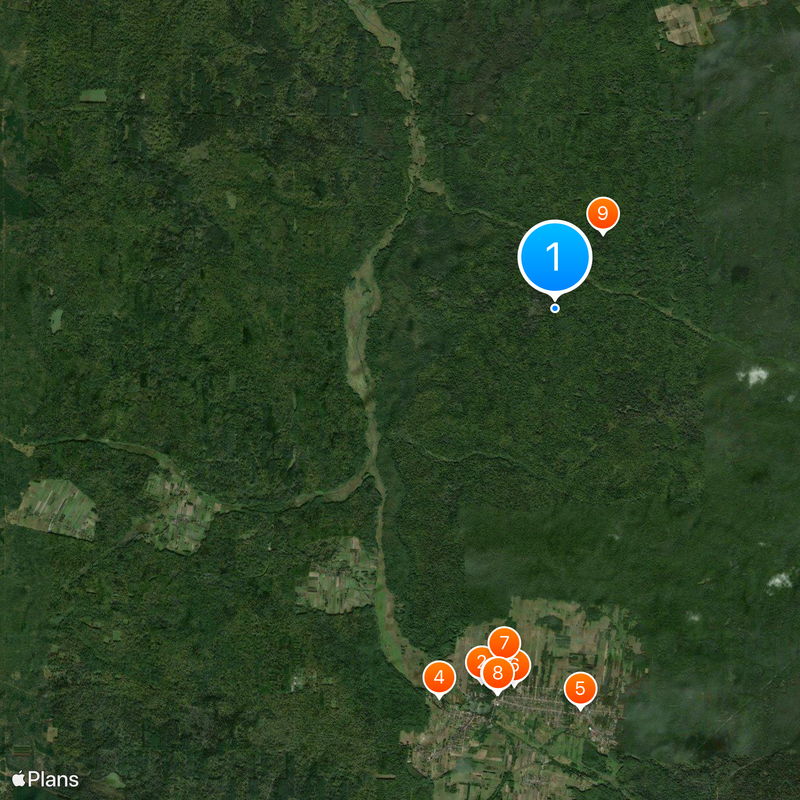
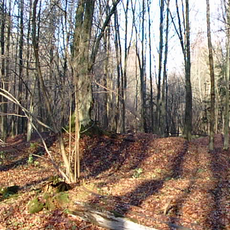
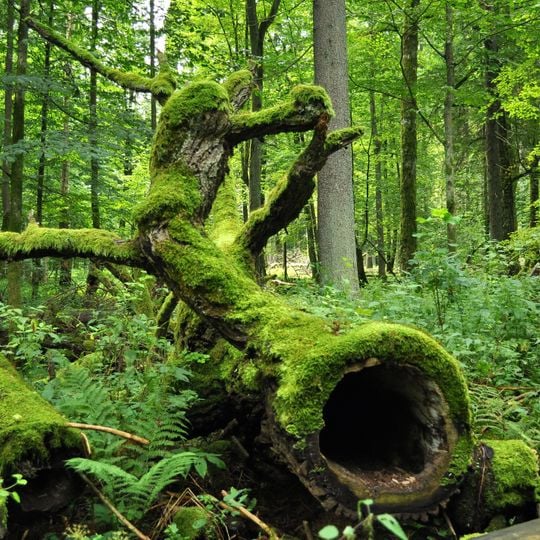
Białowieża National Park covers 105.17 km² in Podlaskie Voivodeship on the Polish-Belarusian border, with 47.16 km² under strict protection where fallen trunks, like the moss-covered hollow log on the forest floor, are left to decay without chainsaws. The woodland is dominated by sessile oak, winter lime and hornbeam, with spruces reaching into the canopy and oaks growing up to 40 m tall.
The area was declared a forest reserve in 1921 and gained national park status in 1932 after Polish authorities secured the last remnants of an ancient woodland. UNESCO recognized the site as a World Heritage property in 1979 and later extended recognition to both sides of the border.
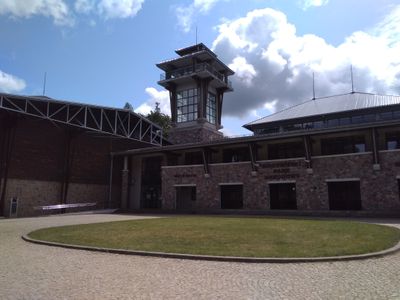
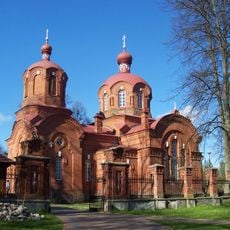
The name Białowieża is commonly explained as "white tower", referring to a former border post. The park's emblem is the European bison, and the village of Białowieża hosts a multimedia exhibition on the park's animals and plants at its teaching and information centre. The strict reserve can only be visited with a guide on fixed routes.
Access to the most strictly protected zones requires a guide and groups are limited to 20 people who must stay on marked trails. Hikers can move freely in other sections, though the ground is often uneven and dense undergrowth may limit visibility.
The forest shelters the largest free-roaming population of European bison, reintroduced after decades of breeding efforts. More than 8,000 species of invertebrates live here, including beetles that feed exclusively on decaying deadwood.
The community of curious travelers
AroundUs brings together thousands of curated places, local tips, and hidden gems, enriched daily by 92,326 contributors worldwide.