Nowy Jasiniec Castle, Gothic castle ruin in Nowy Jasiniec, Poland
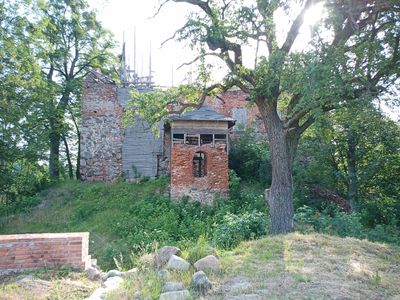
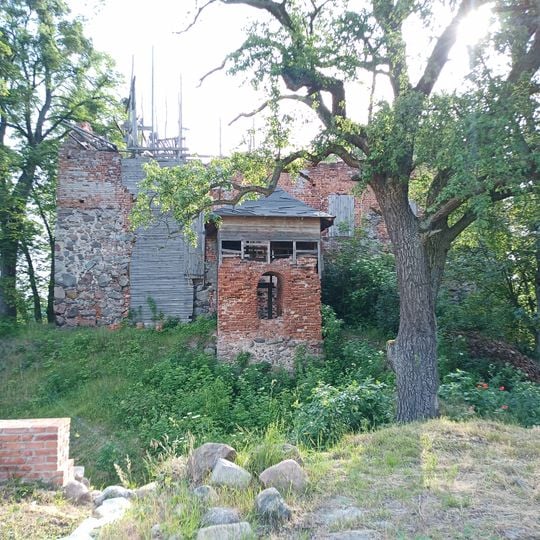
Nowy Jasiniec Castle is a roofless ruin on an elongated rectangular plan of 23 by 13 metres, with two above-ground storeys and walls 8 to 9 metres high. The walls are stone up to 5.3 metres and brick above, and the brick barrel-vaulted cellars survive partly intact. A perimeter wall of field stone and a former outer bailey beyond the moat surround it.
The castle replaced a border stronghold on a peninsula in Lake Zamkowe, seat of the Serock castellan first mentioned in 1264. The Teutonic Knights built the brick castle between 1377 and 1392. It was captured and burned by Polish troops in 1414 and 1433, then became a Polish starosty seat after 1454. In 1773 it was converted into an Evangelical church and abandoned in 1846.
The castle stands where a Pomeranian border stronghold guarded a trade route to Pomerania and Pomezania; a castellan of Serock is first recorded there in 1264, in a document of Duke Mestwin II. The hill is planted with monumental oaks that Leon Wyczółkowski used as a subject for lithographs.
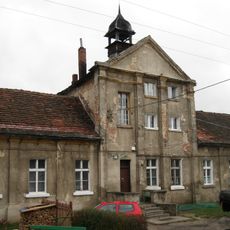
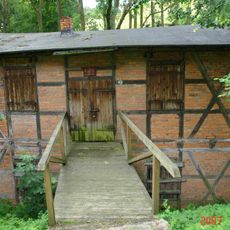
The ruin stands on a small hill by the western shore of Jezioro Zamkowe, north of the Kręgiel stream. The site has no roof, upper walls or interior floors, and the cellars are only partly intact, so watch your step. A wooden stable/forge from the late 19th century with brick infill stands nearby.
The structure was temporarily converted into an evangelical church between the 1770s and 1840s, an unusual repurposing of a military fortress. This transformation left visible traces in how the building was modified to serve religious functions.
The community of curious travelers
AroundUs brings together thousands of curated places, local tips, and hidden gems, enriched daily by 94,418 contributors worldwide.