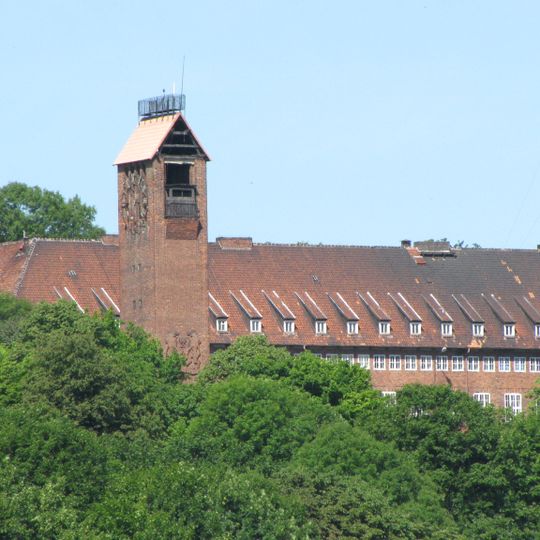
Paul Beneke Youth Hostel
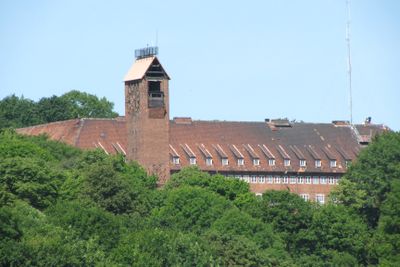
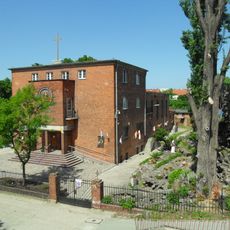
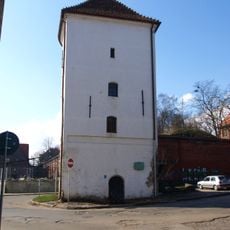
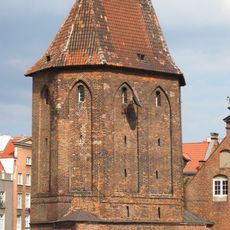
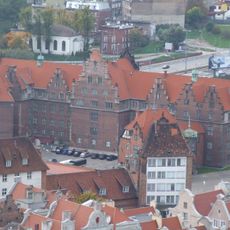
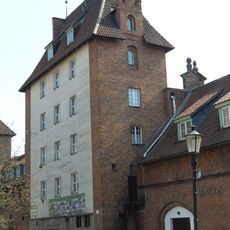
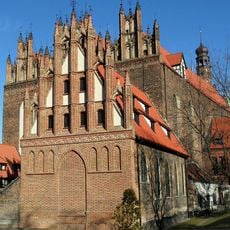
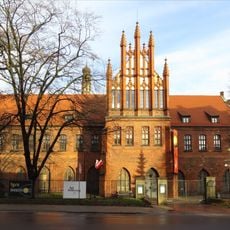
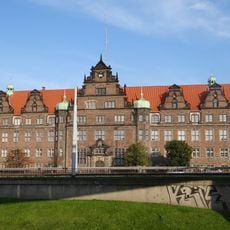
The Paul Beneke Youth Hostel is a lodging building in Gdańsk constructed between 1938 and 1940 with three wings arranged around a central courtyard. It features red brick facades, a distinctive Neptune figure atop the central tower, and was the largest hostel of its kind in Europe when built.
The building was constructed from 1938 to 1940 according to designs by architect Hans Riechert and was originally built to house youth groups of that era. During the war, the tower served as a command post for naval forces, and after 1945 it was repurposed under Soviet and later Polish control, first as a student dormitory and eventually as a police administrative building.
The hostel is named after Paul Beneke, a historical Danzig seafarer and privateer. This name connects the building to the city's maritime past and its former role as a major trading power.
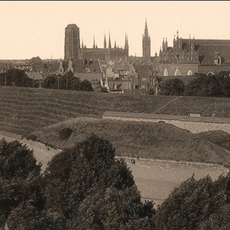
The building sits on a hilltop in Biskupia Górka with good views over the city and is within walking distance of the historic center. Tower access and viewing opportunities are currently limited since the structure remains in administrative use; check ahead about current opening times or guided tour availability.
The tower was originally fitted with 22 bells that played daily at noon with a special display where model ships emerged and simulated a naval battle. The tower fell into disrepair for many years, but the clock was restored and put back in operation in 2017 through a community effort.
The community of curious travelers
AroundUs brings together thousands of curated places, local tips, and hidden gems, enriched daily by 91,436 contributors worldwide.