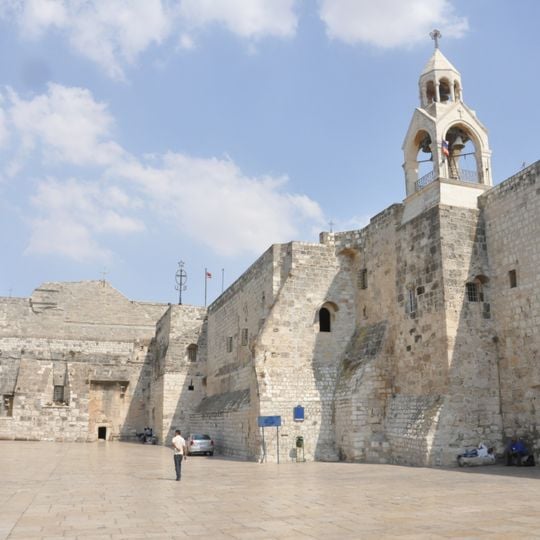
Church of the Nativity, Minor basilica in Bethlehem, Palestine
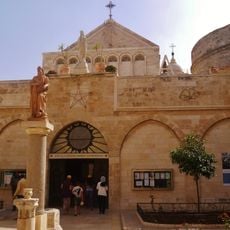
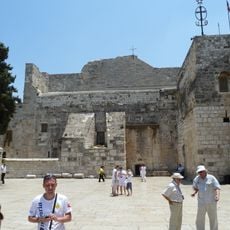
The Church of the Nativity is a basilica in Bethlehem, Palestine, whose present form was rebuilt under Emperor Justinian in the 6th century. Its nave is flanked by four side aisles separated by red limestone columns bearing traces of old paintings, and the timber roof dates from the 16th century. A low doorway leads into a dark vestibule, then through a wooden door carved by Armenian artists in 1227 into the basilica.
Constantine I commissioned the first basilica after his mother Helena identified the grotto in 325–326; construction began in 326 under Bishop Makarios and the church was dedicated on 31 May 339. It was destroyed by fire during the Samaritan revolts, and Justinian I rebuilt the present basilica in the 6th century with a cruciform transept and three apses.
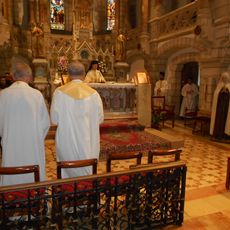
Three Christian denominations share responsibility for different areas of the complex: Greek Orthodox, Roman Catholic, and Armenian Apostolic. Visitors notice this arrangement in the distinct liturgical objects, icons, and design elements that belong to each tradition and coexist peacefully side by side.
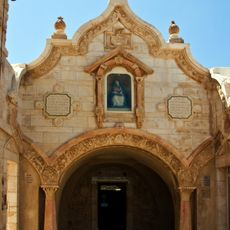
The entrance passes through a low doorway called the Door of Humility, which requires all visitors to bend down when entering. The grotto beneath the altar lies on a lower level and is reached by a narrow stone staircase, which may involve waiting during busy periods.
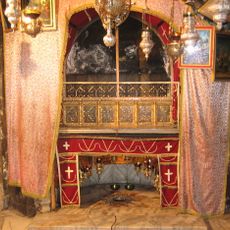
The silver star in the grotto bears a Latin inscription stating "Here Jesus Christ was born to the Virgin Mary" and is surrounded by 15 silver lamps donated by the different denominations. Beneath the floor of the church lie remnants of early Christian mosaics from the 4th century, uncovered during excavations and now partially visible.
The community of curious travelers
AroundUs brings together thousands of curated places, local tips, and hidden gems, enriched daily by 92,129 contributors worldwide.