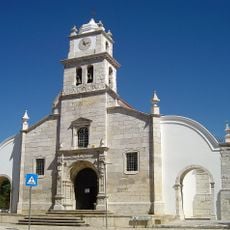
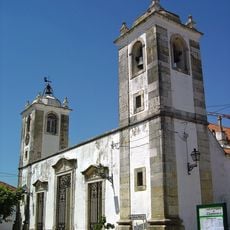
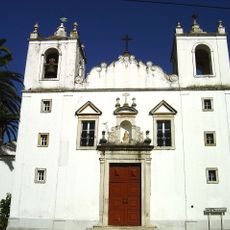
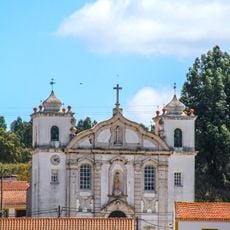
Igreja Matriz da Golegã, National Monument church in Golegã, Portugal.
Igreja Matriz da Golegã is a 16th-century church featuring an ornate stone facade with detailed carvings that showcase Portuguese craftsmanship from that era. The building stands out for its decorated main entrance and architectural details that remain intact today.
The present church was built in the first half of the 16th century, replacing a small Gothic parish church on the same site. The Crown paid part of the cost, the rest falling to local residents, after King Manuel I, who often stayed at nearby Almeirim, took an interest in the town and visited it. The Manueline campaign is attributed to royal architect Diogo Boitaca, who also worked on the Jerónimos Monastery. In 1530 Filipa Caldeira, wife of Fernão Lourenço, was buried in the chancel.
The Manueline pulpit was destroyed in the 18th century, but its stones were found in the rubble of a demolished annex in the 1930s and the pulpit was rebuilt. The main altar now holds a tile panel brought from the Igreja da Graça in Santarém.
The church stands in the centre of Golegã, so it can be reached on foot from the town's main streets. The interior floor was lowered and repaved with stone slabs during the 20th-century restoration, while the churchyard ground was raised. Access may depend on parish services.
On the right jamb of the Manueline portal, near the base, a small dragon of Eastern influence is set into the stone. The facade also carries King Manuel I's coat of arms and an armillary sphere beside the oculus, royal emblems rather than maritime scenes.
The community of curious travelers
AroundUs brings together thousands of curated places, local tips, and hidden gems, enriched daily by 93,123 contributors worldwide.