Golia Monastery, Orthodox monastery in Iași, Romania
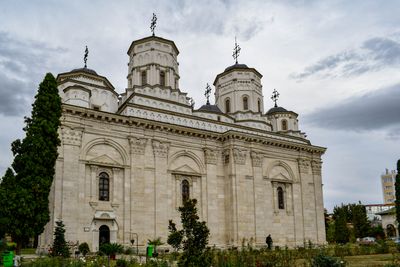
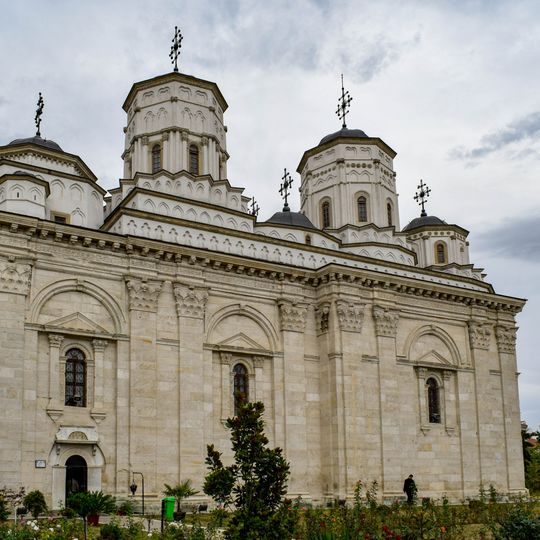
Golia Monastery is a fortified Orthodox complex in Iași, with a rectangular church combining Renaissance and Byzantine elements. Its exterior walls rise over 12 metres on Corinthian pilasters, and seven differently shaped towers crown the roof. The church measures about 30 metres high, 40 long and 13 wide, with a west porch and a trilobed interior of pronaos, naos and altar. The precinct walls are 9 metres high and over 1 metre thick.
The monastery stands on the site of a stone church built around 1550 by the great logothete Ioan Golia, replacing an earlier wooden church. Prince Vasile Lupu rebuilt it on a larger scale between 1650 and 1653, and his son Ștefăniță completed the work in 1660. The corner turrets were added in 1667, and the bell tower was rebuilt in 1900.
The monastery complex houses the Ion Creangă Museum, in the 18th-century house with columns where the writer lived while serving as a deacon at Golia. The Doxologia Cultural Missionary Centre of the Metropolis of Moldavia and Bukovina also operates here. Near the tower stands a public fountain from the time of Alexandru Moruzi.
The bell tower rises 30 metres and the climb to the top takes 120 steps, with a square base of 5 metres per side. The tower has a ground floor, two vaulted levels, a bell room, an upper gallery and terraces. Visitors who want a panorama of Iași should plan for the climb.
The monastery walls, nine metres high and over one metre thick, have an inner ledge once used for patrols. The bell tower, rebuilt in 1900, rises thirty metres and is reached by 120 steps. In 2012 the monastery received the European Union Prize for Cultural Heritage / Europa Nostra Award.
The community of curious travelers
AroundUs brings together thousands of curated places, local tips, and hidden gems, enriched daily by 93,563 contributors worldwide.