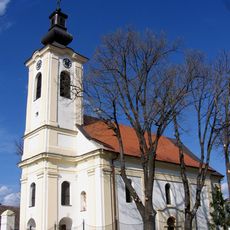
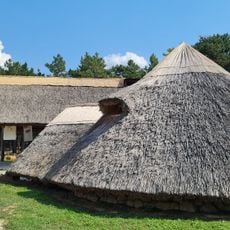
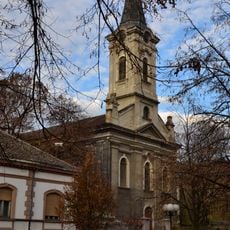
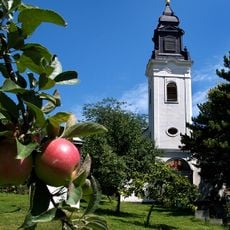
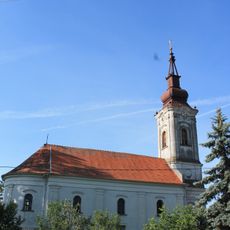
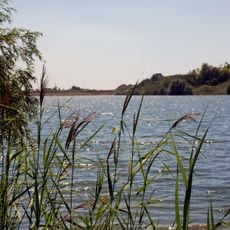
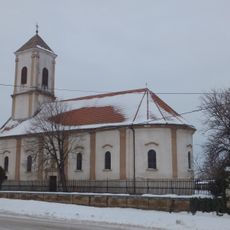
Bassianae, Archaeological ruins in Donji Petrovci, Serbia.
Bassianae is an archaeological site near Donji Petrovci whose remains cover 28 hectares. Aerial photographs show the town was an irregular pentagon measuring 550 by 350 metres, enclosed by walls with square-based towers. Its streets followed a grid, with gates at the ends of the main streets, the cardo and decumanus.
The settlement began in the 1st century and became a Roman colony with official status by the year 214. It remained important until Avar forces conquered the region in the 6th century, bringing this chapter of history to a close.
The town's name survives in the title of an official, procurator gynaecii Bassianensis Pannoniae secundae, recorded in the late empire. A gynaecium, an imperial woolen mill, operated here in the 4th century, and the town was also the seat of a Christian bishopric. A bronze ring found on the municipium's territory, inscribed Veni – Amica ("come, friend"), is dated to the 3rd or 4th century.
The remains lie near Donji Petrovci, about 3 km from the military camp at Solnik near Dobrinci. The 28-hectare site has no regular excavations since 1935, so paths are unpaved and overgrown; wear sturdy footwear. The ground is often wet or muddy.
The most notable find from Bassianae is a bronze ring from the 3rd or 4th century, 1.9 cm across and weighing 2 grams, inscribed Veni – Amica ("Come, friend"). Scholars read it as a betrothal gift, since such phrases appeared on luxury Roman pottery and in love poetry but not on jewellery before.
The community of curious travelers
AroundUs brings together thousands of curated places, local tips, and hidden gems, enriched daily by 94,737 contributors worldwide.