RKK Energiya museum, Aviation museum in Korolyov, Russia
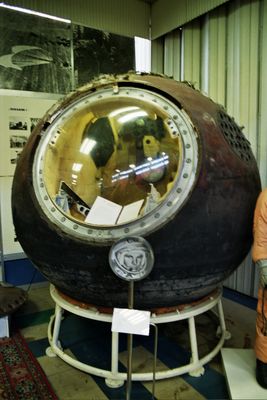
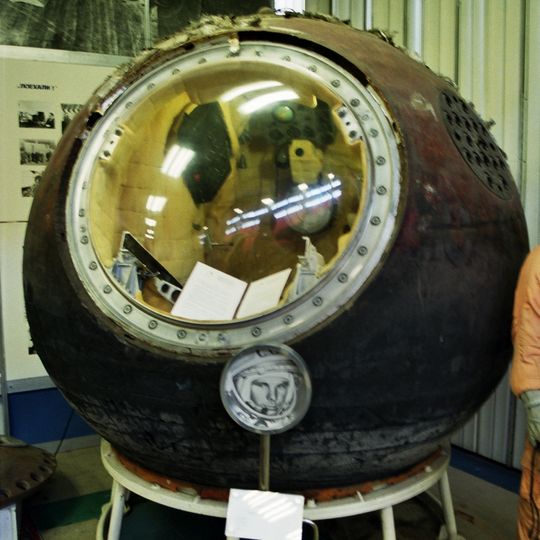
The RKK Energiya museum occupies the grounds of the RKK Energiya factory in Korolyov, near Moscow. Its exhibition hall covers 1,300 m², with a further 250 m² room devoted to chief designer Sergey Korolev and a hall on the company's history. The displays centre on flown hardware: the Vostok 1 capsule, the Vostok 6 capsule, the Voskhod 2 capsule, the Zond 5 capsule and the Soyuz 19 capsule, alongside Luna, Venera and Sputnik probes, Elektron satellites, spacesuits and the Kvant module of the Mir station.
The museum documents Soviet space achievements starting with the Sputnik launch in 1957 and Yuri Gagarin's orbital flight in 1961. These milestones marked humanity's entry into space and the Soviet Union's leadership during that era.
The museum occupies the grounds of RKK Energia, the company formed on 26 August 1946 as department No. 3 of NII-88, with Sergey Korolev as chief designer of a staff of 130. A 250 m² hall is devoted to Korolev, and since 1991 the corporation has borne his name. The recovered Vostok 1 capsule in which Yuri Gagarin became the first man in space is among the exhibits.
The museum sits on the grounds of the RKK Energiya factory in Korolyov, near Moscow, so access is tied to a working industrial site rather than a standalone exhibition building. The display space is split between a 1,300 m² main hall, a 250 m² room devoted to Sergey Korolev and a hall on the company's history, which helps in planning a route through the collection.
The outdoor section displays full-scale rocket models and spacecraft in their actual dimensions, allowing visitors to grasp the true size of these machines. Viewing this hardware under the open sky creates a different impression than indoor exhibition halls.
The community of curious travelers
AroundUs brings together thousands of curated places, local tips, and hidden gems, enriched daily by 93,891 contributors worldwide.