Plotinka, Heritage dam in Yekaterinburg, Russia
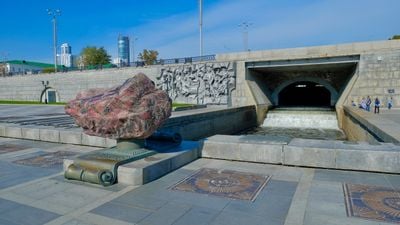
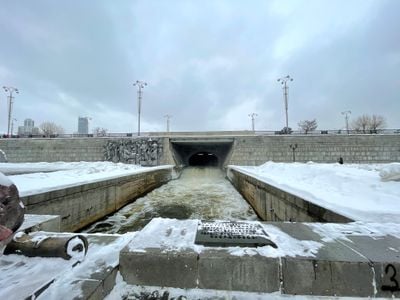
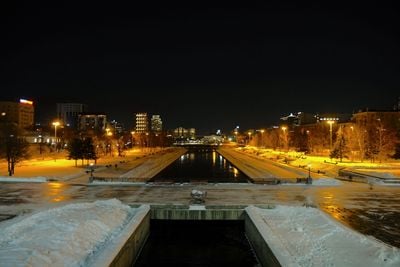
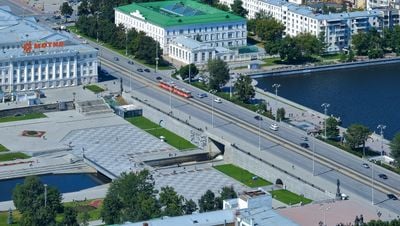
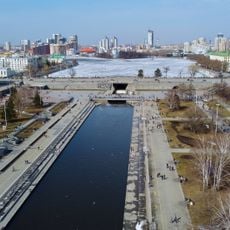
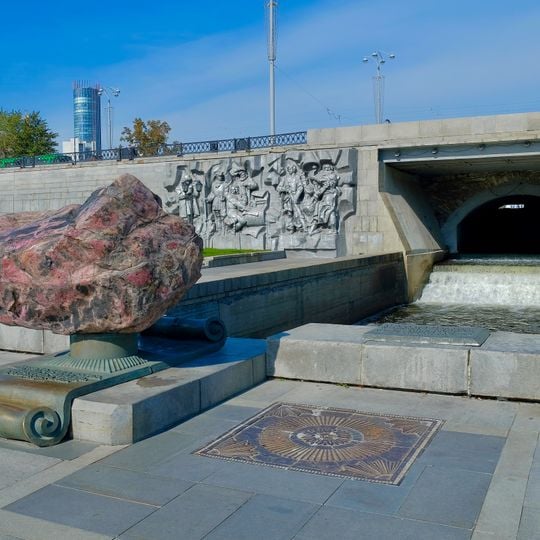
Plotinka is a dam on the Iset River in Yekaterinburg, built of larch logs and granite and measuring 209 metres long, 42 metres wide and 6.5 metres high. Its granite-faced retaining wall carries bas-reliefs, and sculptures symbolising the skills of Ural metallurgists stand at its edges. Lenin Avenue, the city's main avenue, runs along the dam's axis.
Construction began in 1721 on Vasily Tatishchev's order, was halted for lack of Berg-Collegium approval, and resumed in March 1723 after Wilhelm de Gennin arrived in the Urals. It was completed on 11 September 1723, powering the new Yekaterinburg Iron Works. The dam was widened in the 1830s to Mikhail Malakhov's design, faced with granite in 1972–1973, and reinforced with concrete slabs in 1998.
Locals call the dam and the adjoining square Plotinka. Since 1886 a park has stood on the dam; busts of Peter I and Catherine I were placed there, torn down by soldiers in 1917, and later replaced by busts of writer Pavel Bazhov (1958) and author Dmitry Mamin-Sibiryak (1987). The site remains a traditional venue for public festivities.
The dam's crest forms a flat walkway along the axis of Lenin Avenue, so the site is crossed on foot or by road rather than viewed from below. A passage made in 1998 through one of the old side openings links the lower terrace of the Historical Park to the upper platform. The 1972-1973 granite facing and the bas-reliefs on the retaining wall are best seen from the water side.
The original larch wood foundation beneath the stone structure has survived for over 300 years, revealing the thoughtful engineering of early Russian industry. Few visitors realize this hidden layer demonstrates how builders solved durability problems with materials adapted to the harsh climate.
The community of curious travelers
AroundUs brings together thousands of curated places, local tips, and hidden gems, enriched daily by 94,368 contributors worldwide.