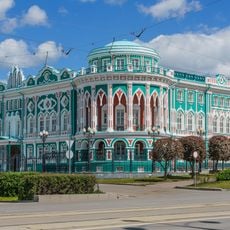
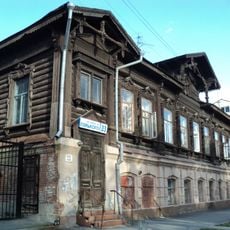
Yekaterinburg jewellery museum, Jewelry and gemstone museum in Kirovski district, Yekaterinburg, Russia.
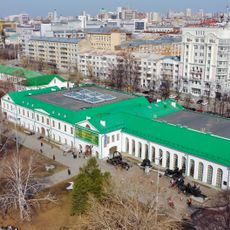
The Museum of the History of Stone-Cutting and Jewellery Art occupies the former Pharmacy of the Mining Department in central Yekaterinburg, a building designed by architect Mikhail Malakhov and constructed in 1821–1822. Its halls hold the Silver Room and the Gold Vault, tracing Russian jewellery from the 9th century to the early 20th, alongside products of the Imperial Yekaterinburg Lapidary Factory, Ural stone-cutting crafts, and a mineralogical collection.
The museum opened in 1992 after Dmitry Likhachev's Soviet Culture Fund proposed the "World of Stone" programme to Nadежда Pakhomova, chief curator of the regional museum. It was created from part of that museum's collection, including the UOLE legacy, in the former Mining Department Pharmacy built by architect Mikhail Malakhov in 1821–1822.
The exhibition halls display pieces from imperial workshops and contemporary craftspeople, showing how jewelry making has evolved in Russian tradition. These works reveal the importance of gemstones in the region's artistic heritage.
The museum occupies the former Mining Department Pharmacy at Lenina Avenue 37, in Yekaterinburg's historic centre. The building was designed by architect Mikhail Malakhov and constructed in 1821–1822. The exhibition is arranged across several halls, among them the Silver Room and the Gold Vault, so allow time to move between them.
The museum's collection includes objects made by Nikolai D. Tataurov, who began as an apprentice at the Yekaterinburg Imperial lapidary factory and until the 1950s was the leading stone-cutter at the Russkiye Samotsvety plant. The museum also holds works by Ural craftsmen of the 1920s and 1930s.
The community of curious travelers
AroundUs brings together thousands of curated places, local tips, and hidden gems, enriched daily by 94,005 contributors worldwide.