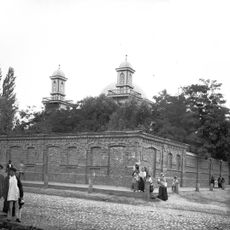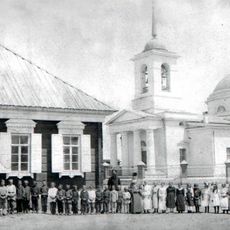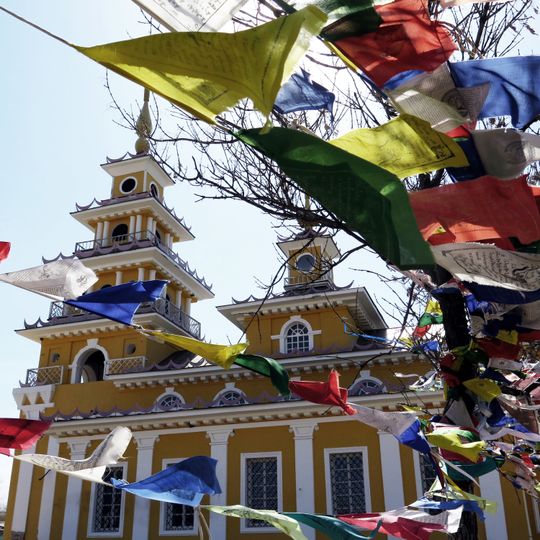
Khosheutovsky khurul, Buddhist monastery in Rechnoye, Russia
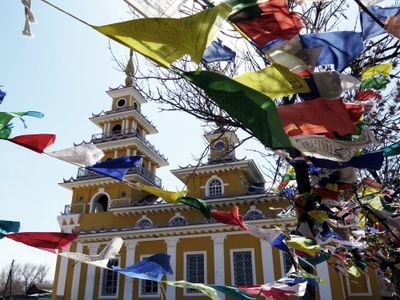
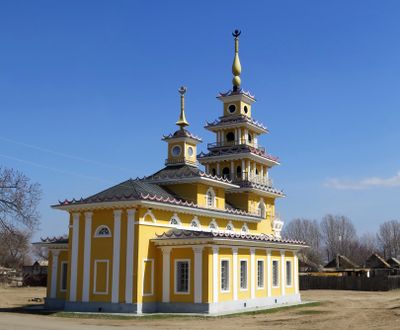
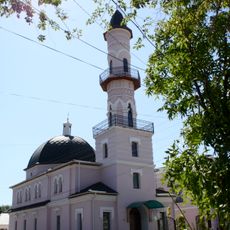
Khosheutovsky khurul is a Buddhist monastery in Rechnoye that combines Russian classical and traditional Kalmyk architectural styles. The building merges European and Asian design elements into a single structure that now functions as a federal heritage site and museum.
The monastery was constructed in 1817 and 1818 by Serebdzhab Tyumen to honor Russian victory in the Patriotic War of 1812 against French forces. It stands today as the sole surviving example of pre-revolutionary Kalmyk Buddhist temples, reflecting how this community commemorated major events.
The building reflects the Gelug tradition of Tibetan Buddhism with architectural influences drawn from the Kazan Cathedral in Saint Petersburg. These stylistic elements appear in the ornamental details and overall form as you move through the spaces.
The monastery welcomes visitors during regular hours and offers guided tours explaining the architectural features and cultural importance. It is best to allow adequate time to explore both the interior spaces and exterior details to fully appreciate the building's design elements.
The monastery's original layout resembles a bow and arrow, a distinctive design that reflects its historical purpose and cultural meaning. This unusual ground plan is rare among surviving Buddhist structures in Russia and shows a creative connection between architectural form and function.
The community of curious travelers
AroundUs brings together thousands of curated places, local tips, and hidden gems, enriched daily by 92,392 contributors worldwide.