Ozero Chebakul', Protected lake in Chelyabinsk Oblast, Russia.
Lake Chebakul is a lake in Kunashaksky District, Chelyabinsk Oblast, Russia, 5 km southwest of the village of Kunashak. Its basin formed through ancient tectonic processes and was later partly filled with sedimentary rock. The lake covers 17.9 km², reaches 5.2 m deep, and has a small rocky island in the middle.
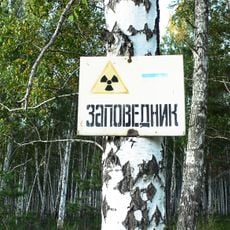
On 11 July 1949 a meteorite fragment fell into Lake Chebakul; it was later named Kunashak. The lake lies 5 km southwest of the village of Kunashak, and some media confuse it with Lake Chebarkul, about 100 km to the southwest, where a fragment of the Chelyabinsk meteorite fell on 15 February 2013. On 23 October 1989 the lake was designated a regional nature monument.
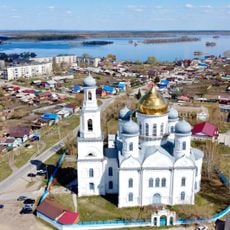
The lake lies in the Kunashak district, with the village of Chebakul on its northwestern shore and Karakulmyak on the southern shore, both part of the Sarinsky rural settlement. The water is brackish, with a total ion content of about 5 g per litre, and is valued for its balneological properties. The lake is also a fish nursery where acclimatised peled are raised.
The lake lies 5 km southwest of Kunashak, with the village of Chebakul on the northwest shore and Karakulmyak on the south. The bottom near the shore is sandy and suitable for swimming, while the western banks are overgrown with reeds and swampy. The water is salty and chloride-class, so drinking it is not advisable.
The meteorite that fell into Lake Chebakul on 11 July 1949 was later named "Kunashak" after the district; some media confuse this lake with Lake Chebarkul, 100 km to the southwest, where a fragment of the "Chelyabinsk" meteorite fell on 15 February 2013. The lake has been a regional nature monument since 23 October 1989, with a protected area of 18.4 km².
The community of curious travelers
AroundUs brings together thousands of curated places, local tips, and hidden gems, enriched daily by 93,973 contributors worldwide.