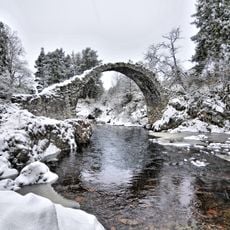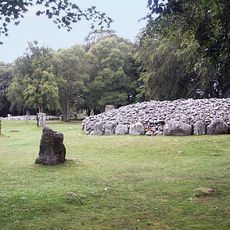
Tomatin distillery, trademark
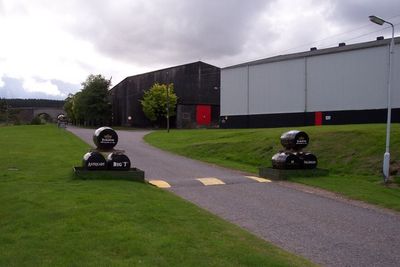
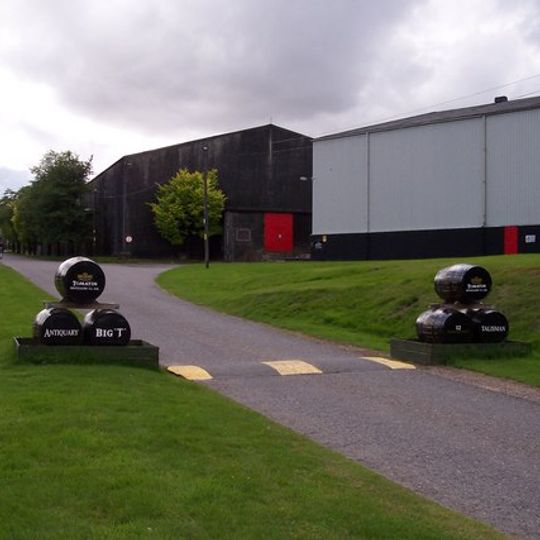
Tomatin Distillery is a whisky distillery in the Scottish Highlands near Inverness. The complex features functional buildings with storage areas, work spaces, and worker cottages spread across the site, with a visitor center offering tastings and a stillhouse where copper stills are visible during production. The distillery processes barley using mill machines and fermentation tanks, then ages the whisky in warehouses filled with wooden barrels.
The distillery was founded in 1897 after a railway line reached the area, though locals had illegally distilled whisky since the 1700s. It closed in 1906 but reopened in 1909 under new management and expanded with modern equipment. By the 1970s it became the world's largest malt whisky producer with over 20 stills before facing economic hardship in the 1980s and being purchased by a Japanese company in 1986.
The name Tomatin comes from Gaelic and means Hill of the Juniper. The distillery is deeply woven into the local community, with workers living in cottages nearby and leaving their signatures on the walls of the old bottling room as a mark of pride and belonging.
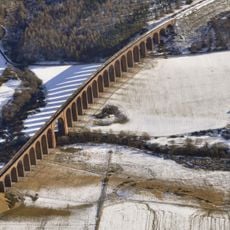
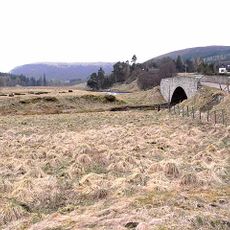
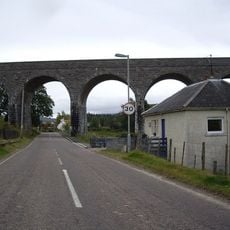
The site is easy to reach and sits right next to the main road between Aviemore and Inverness. Visitors can join guided tours starting from the visitor center, access tastings and a shop, and have the chance to bottle their own whisky in their choice of finishes. The distillery is close to the railway line, which makes navigation straightforward for those planning a visit.
Since 2005, the distillery produces lightly peated whisky one week each summer under the brand Cù Bòcan, an unusual rarity for a distillery otherwise known for its unpeated fruity style. This experimental production using unconventional cask types like Moroccan wine barrels or American rye casks makes the place stand out for whisky enthusiasts.
The community of curious travelers
AroundUs brings together thousands of curated places, local tips, and hidden gems, enriched daily by 92,744 contributors worldwide.