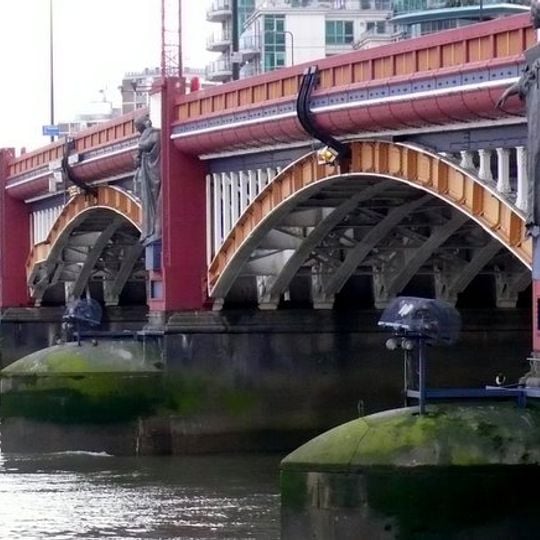
Vauxhall Bridge, Steel bridge in central London, England
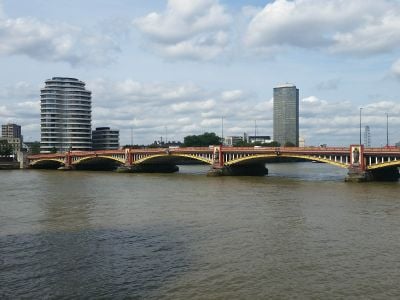
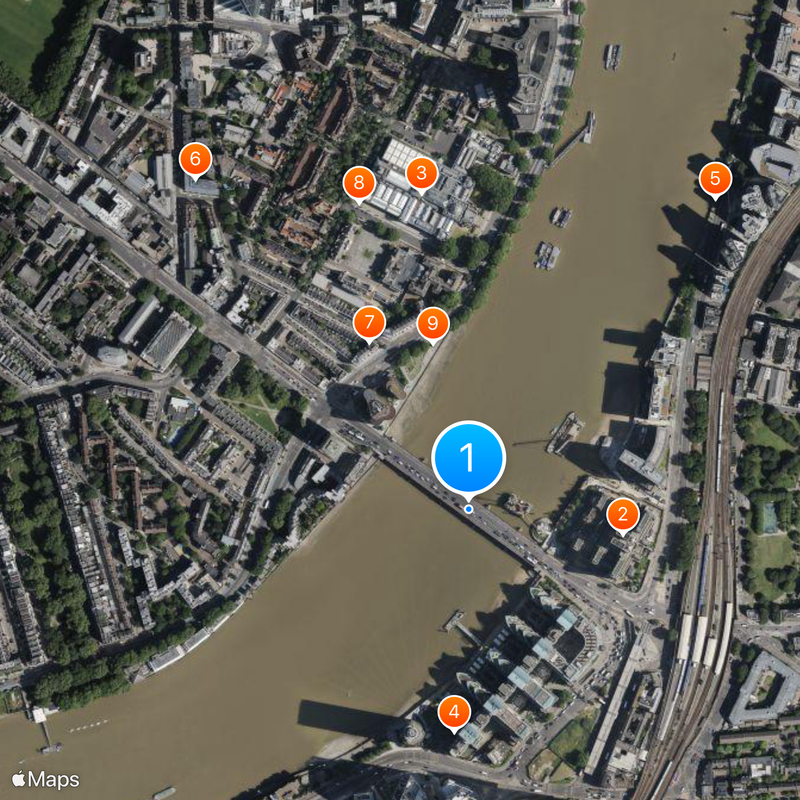
Vauxhall Bridge is a steel arch bridge over the Thames in central London, linking Westminster on the north bank with Lambeth on the south bank. Its five shallow arches carry four traffic lanes and sidewalks on both sides, offering open views upstream and downstream along its 270-meter length.
The current structure was designed by Alexander Binnie and Maurice Fitzmaurice and replaced an earlier iron bridge from 1816, when the growing city urgently needed additional crossings over the river. The new steel construction officially opened to traffic in May 1906.
Eight bronze sculptures on the piers show allegories such as Agriculture, Architecture or Fine Arts, created by Alfred Drury and Frederick Pomeroy. The figures are easy to see in daylight and give the structure an unusual artistic element for a Thames crossing.
The structure carries four traffic lanes and has wide sidewalks on both sides for pedestrians, allowing a comfortable walk over the water in good weather. The crossing is part of the Cycle Superhighway network and provides cyclists with a safe route through the center.
The Russian word вокзал (vokzal), meaning railway station, comes from the name Vauxhall, as Russian travelers in the 19th century often arrived at the nearby Vauxhall Station. This linguistic link between London and Russia remains alive in everyday speech today.
The community of curious travelers
AroundUs brings together thousands of curated places, local tips, and hidden gems, enriched daily by 91,507 contributors worldwide.