Leaderfoot Viaduct, Victorian railway viaduct in Scottish Borders, Scotland
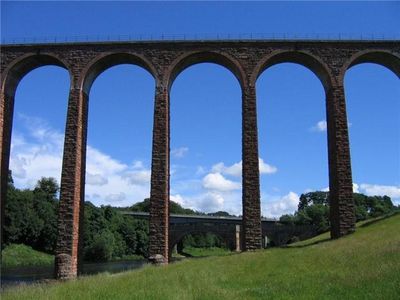
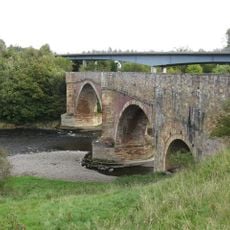
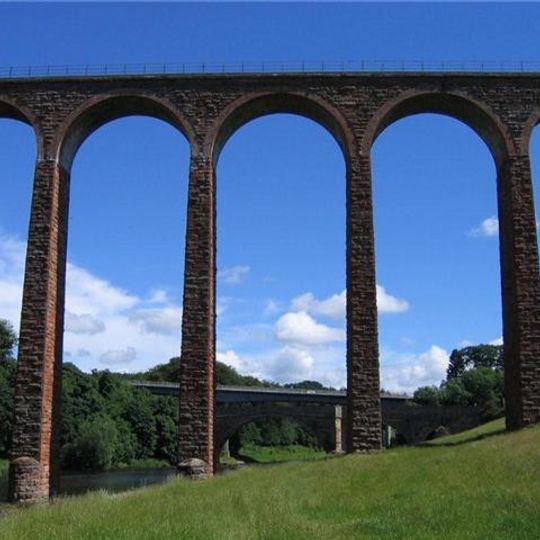
Leaderfoot Viaduct is a railway bridge built from red sandstone that crosses the River Tweed with nineteen arched supports. These arches reach about 130 feet high, and the entire structure stretches across the water for about 900 feet.
The viaduct was designed by engineers Charles Jopp and the firm Wylie & Peddie for the Berwickshire Railway and opened in 1863. It later underwent major restoration work between 1992 and 1995, which included stone replacement and repairs below the waterline.
The viaduct stands near an ancient Roman settlement and forms part of a three-bridge complex that local people call Tripontium.
The viaduct can be viewed from a nearby footbridge and is accessible year-round. The best views come from different spots along the riverbank and nearby walking paths.
The red sandstone blocks of the viaduct have a dimpled surface that was specially designed for hydraulic lifting during construction. These details show the careful engineering methods used by the Victorian builders.
The community of curious travelers
AroundUs brings together thousands of curated places, local tips, and hidden gems, enriched daily by 90,812 contributors worldwide.