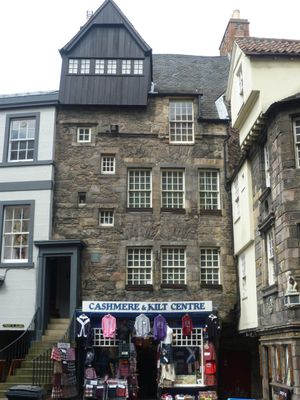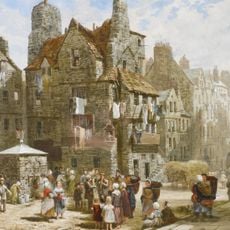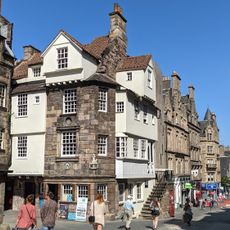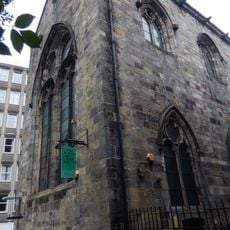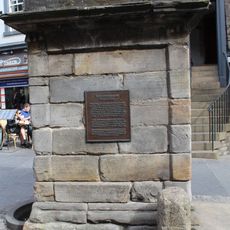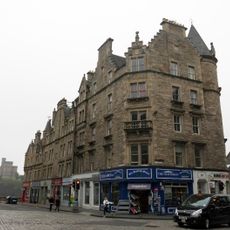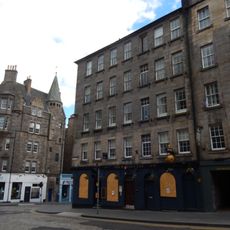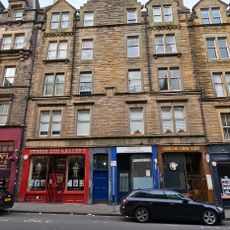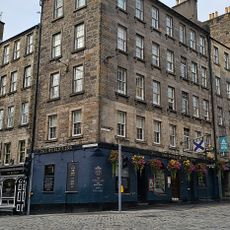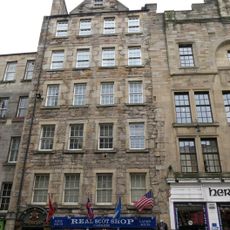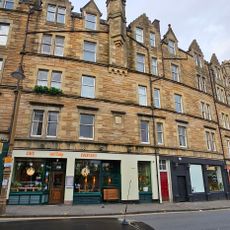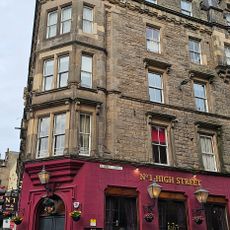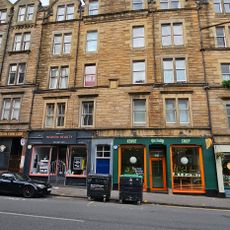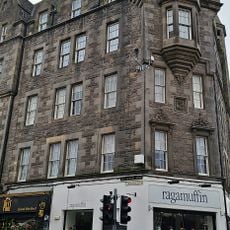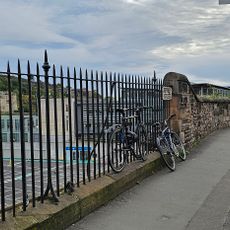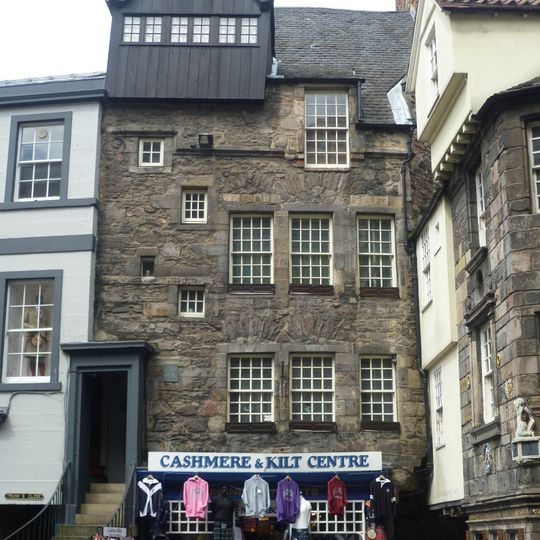
Moubray House, Category A listed building on High Street, Edinburgh, Scotland.
Moubray House is a multi-story stone building on the Royal Mile in Edinburgh's Old Town, classified as a category A listed building in Scotland. It is made up of several building phases, which explains the mix of medieval and early modern elements visible on its facade.
The building was first put up by Robert Moubray in the 15th century and later rebuilt in the early 16th century. It survived the burning of Edinburgh in 1544, which makes it one of the oldest standing structures along the Royal Mile.
The house is said to have sheltered Daniel Defoe during his time in Edinburgh, when he was working as an English spy gathering political information. This connection gives the building a reputation that goes well beyond its stone walls.
The building stands along High Street, the busiest stretch of the Royal Mile, and is easy to reach on foot from most parts of the city center. The interior is naturally lit, so daytime is the best time to take in the painted details inside.
A hand-painted Renaissance ceiling from 1650, decorated with fruit and flower patterns, still survives inside the building. Ceilings like this were once common in 17th-century Scottish townhouses but very few have made it through to today.
The community of curious travelers
AroundUs brings together thousands of curated places, local tips, and hidden gems, enriched daily by 91,438 contributors worldwide.