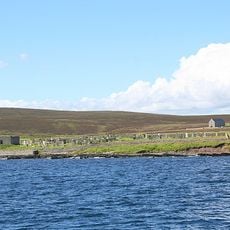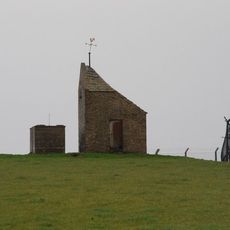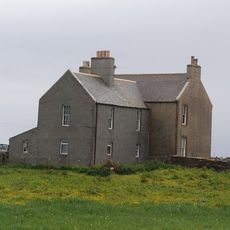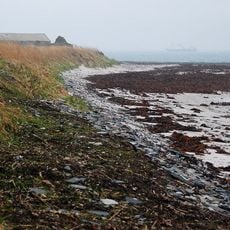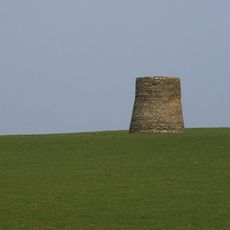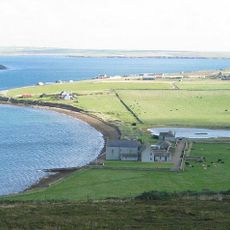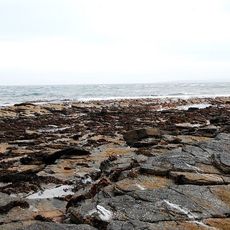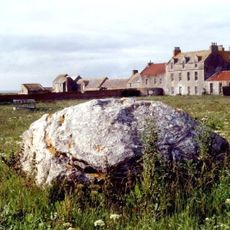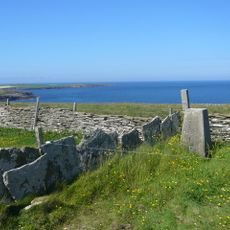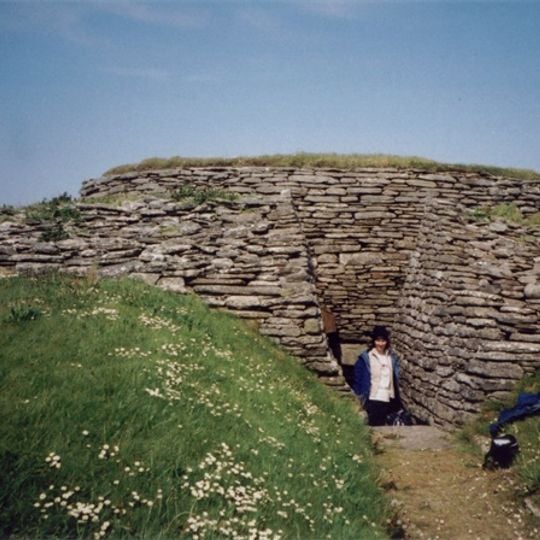
Quoyness chambered cairn, Neolithic burial monument in Els Ness, Scotland.
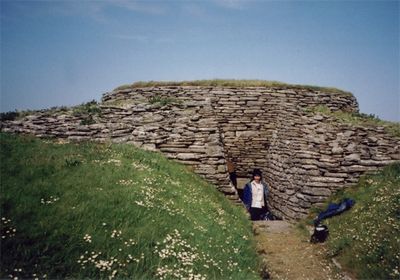
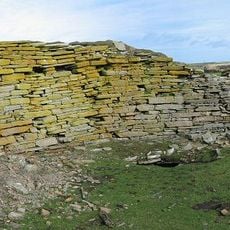
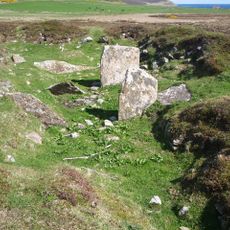
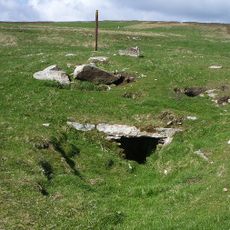
Quoyness is a Neolithic stone tomb built on a wide platform of flat slabs, earth, and refuse material that rises from the ground. The central chamber reaches about 4 meters high and is surrounded by six smaller cells arranged symmetrically in the rectangular interior space.
This monument was built around 3000 BCE and is among the oldest structures on the Orkney Islands. Excavations in 1867 by James Farrer uncovered the remains of ten adults and four children, showing that it served as a burial place across many generations.
The arrangement of cells around the central chamber shows how Neolithic Orkney communities organized burial spaces for their dead. Visitors walking through can see how the builders created symmetry and order within the stone structure.
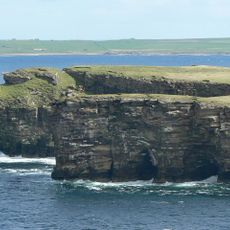
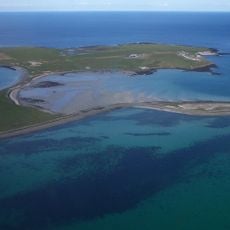
The cairn sits on the Els Ness peninsula and is reached by walking a grassy track from the parking area near Lady Kirk ruins, which takes about twenty minutes. The route crosses mostly flat ground, making access relatively straightforward, though wet weather can make the paths muddy and slippery.
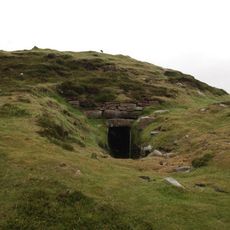
The interior of this tomb is reached through a long entrance passage that is typical of passage grave design found across Orkney. This architectural style demonstrates the sophisticated building techniques that Neolithic people used on these islands.
The community of curious travelers
AroundUs brings together thousands of curated places, local tips, and hidden gems, enriched daily by 90,802 contributors worldwide.