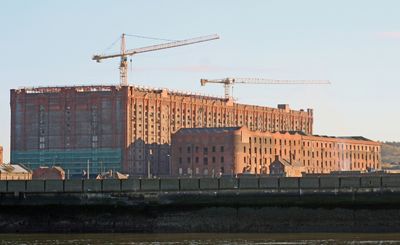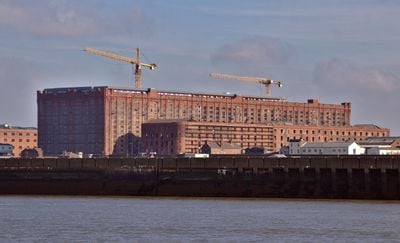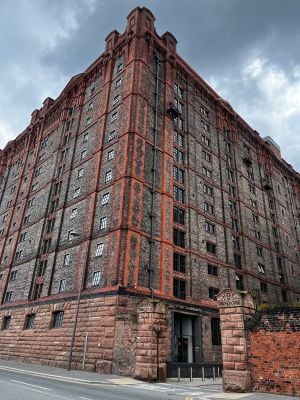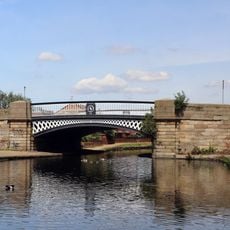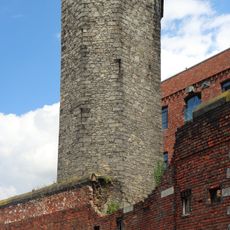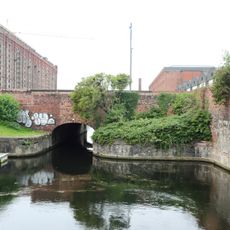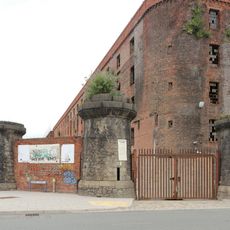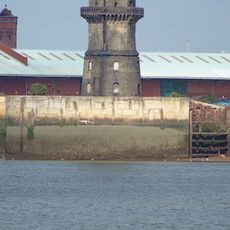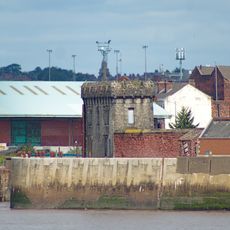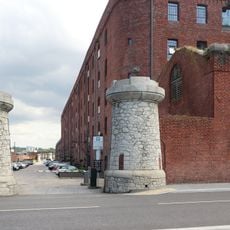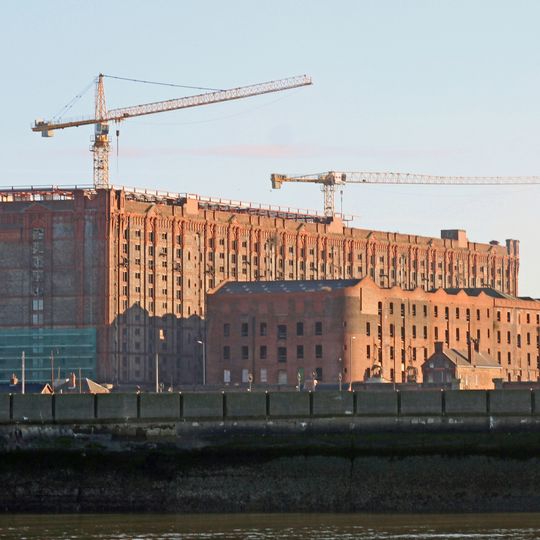
Stanley Dock Tobacco Warehouse, Grade II listed warehouse in Liverpool, England
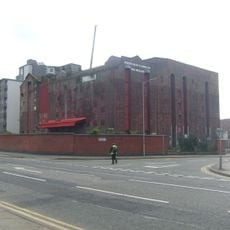
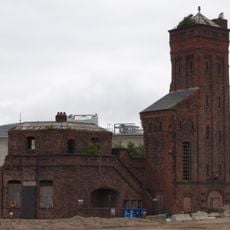
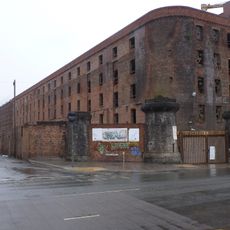
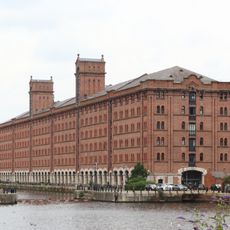
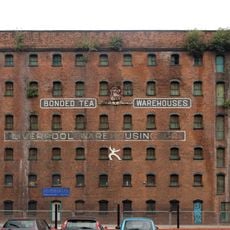
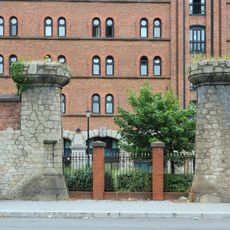
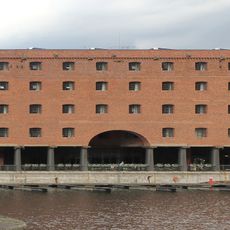
The complex extends across 149,000 square meters (1.6 million square feet) over 14 stories with red brick walls and extensive cast iron construction. The north facade measures 125 meters (410 feet) in length, while interior courtyards cut through the building to bring natural light into deeper sections. Continuous rows of windows punctuate the exterior walls, and massive iron beams support the intermediate floors throughout the footprint.
Construction took place in 1901 during the height of Liverpool's maritime commerce and required 27 million bricks, 30,000 glass panes, and 8,000 tons of steel. Architect A.G. Lyster designed the facility for the Mersey Docks and Harbour Board to store tobacco imports from the colonies. Following the decline of port operations in the late 20th century, the warehouse stood empty for decades until conversion to residential use began in the 2010s.
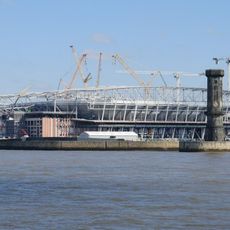
This structure embodies Liverpool's position as a leading tobacco trading port in the British Empire and now forms part of the city's maritime heritage within the UNESCO World Heritage Site. The facility documents the economic importance of seaborne commerce to the region and serves as visible evidence of the industrial past along the docklands that continues to shape the city's identity.
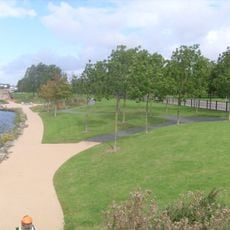
The building now contains luxury apartments ranging from 89 to 251 square meters (958 to 2,700 square feet) with views over the dock basin and city skyline. Access is via Great Howard Street, reachable by bus and ferry connections from the city center in 15 minutes. The site forms part of a larger dockland regeneration project with public walkways along the water, though there is no regular interior access for visitors.
Engineers erected this massive structure on reclaimed land from Stanley Dock, creating the world's largest brick warehouse building at that time. Foundation work required innovative techniques due to the soft substrate, and the iron framework was combined with a hydraulic elevator system that transported goods to the uppermost floors. Construction took only three years despite the immense dimensions and complex structural engineering requirements.
The community of curious travelers
AroundUs brings together thousands of curated places, local tips, and hidden gems, enriched daily by 90,769 contributors worldwide.