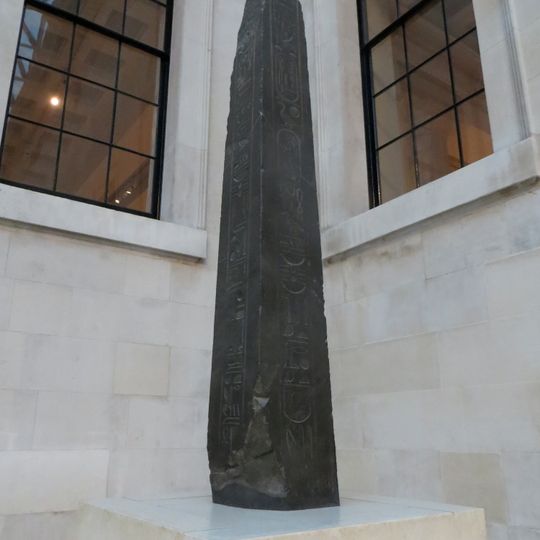
Obelisks of Nectanebo II, Egyptian obelisks in the Great Court, British Museum, United Kingdom
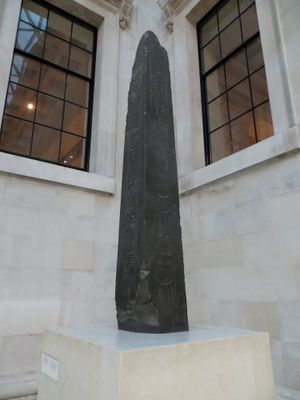
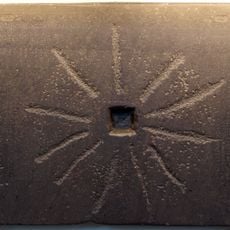
The Obelisks of Nectanebo II are a pair of black stone monuments from Egypt, now standing in the Great Court of the British Museum. Each rises to about 1.74 meters and bears finely carved hieroglyphic text on multiple sides, preserving the name and deeds of this pharaoh.
These monuments were built by Nectanebo II in the Egyptian city of Hermopolis and represent his final known building projects before Persian conquest. They arrived in European hands during the 1700s and were gifted to King George III in 1802.
The carved inscriptions show how the ancient Egyptians honored the god Thoth and reveal their religious beliefs of that time. Visitors can see the carefully cut hieroglyphics and understand the importance of this deity in their spiritual life.
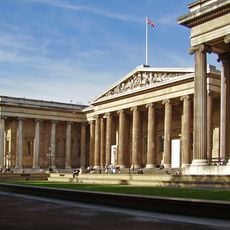
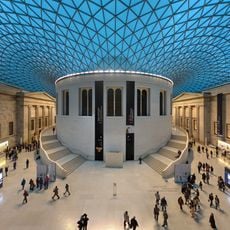
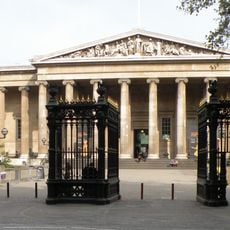
The two obelisks are permanently displayed in the Great Court of the British Museum and can be visited free of charge during regular opening hours. The courtyard is easily accessible and offers an open setting where you can view the monuments from different angles.
These obelisks are among the final works built by an Egyptian ruler on his own land before foreign powers took control of the region. This makes them rare witnesses to a turning point in Egyptian history that visitors often overlook.
The community of curious travelers
AroundUs brings together thousands of curated places, local tips, and hidden gems, enriched daily by 91,997 contributors worldwide.