Shabaka Stone, Ancient Egyptian sculpture at British Museum, England
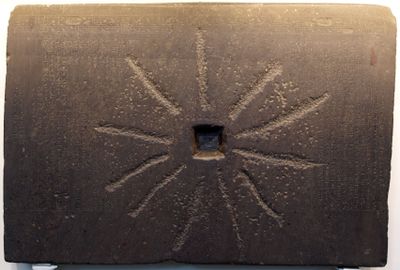
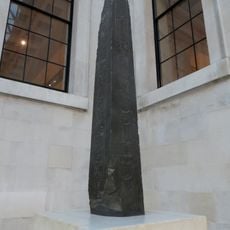
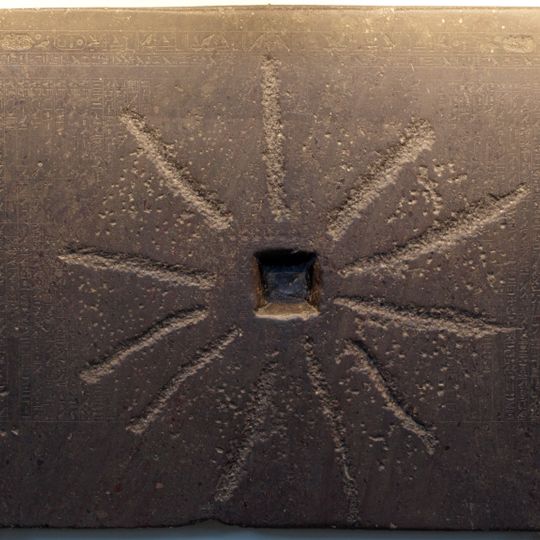
The Shabaka Stone is an ancient Egyptian inscribed stone displayed at the British Museum, carved with hieroglyphic text across its granite surface. The inscriptions cover roughly sixty columns of text arranged in two horizontal bands, containing religious and mythological content.
The stone originated in the Temple of Ptah in Memphis and was later moved to Alexandria before being given to the British Museum in 1805. Over the centuries, it was repurposed for other uses, which affected its original condition.
The inscriptions tell the creation story from Memphis, showing how the god Ptah was understood as the supreme force in ancient Egyptian belief. Visitors can observe how ancient Egyptians expressed their ideas about creation and divine power through written symbols.
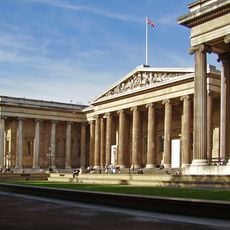
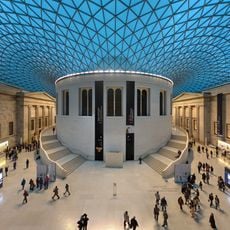
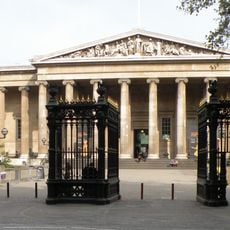
The stone is located in Room 4 of the British Museum and is accessible to visitors exploring the Egyptian collection. It helps to allow time to view the hieroglyphic inscriptions closely and read the information displays nearby.
The stone bears a rectangular hole in its center that was made when it was repurposed as a grinding stone base in later periods. This hole tells the story of how ancient Egyptian objects were given new functions long after their original purpose.
The community of curious travelers
AroundUs brings together thousands of curated places, local tips, and hidden gems, enriched daily by 60,000 contributors worldwide.