Longdon-Upon-Tern aqueduct, Navigable iron aqueduct in Longdon-on-Tern, England
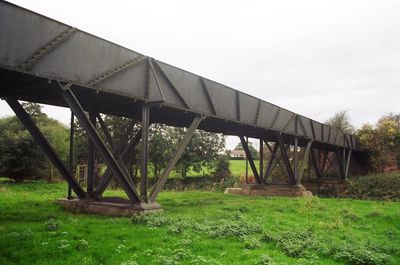
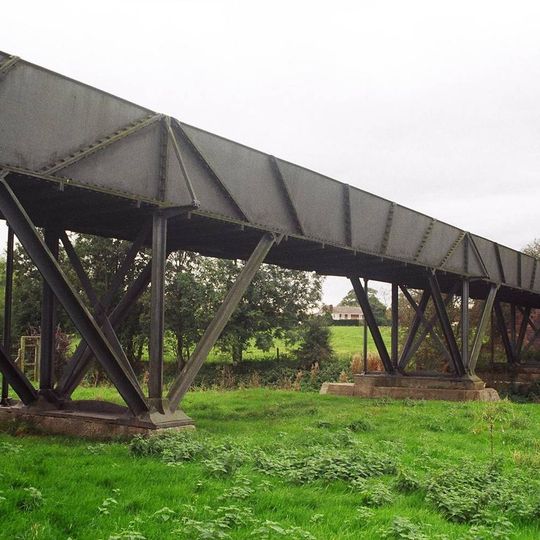
Longdon-on-Tern aqueduct is a cast iron structure that carries an empty canal trough across the River Tern, resting on stone abutments below. It consists of four spans held up by iron uprights and diagonal bracing that create the channel for boats to pass over water.
Thomas Telford designed this cast iron aqueduct in 1796 after an earlier stone structure by William Clowes had been damaged by flooding. The shift to cast iron represented a major advance in how canal infrastructure could be built.
This aqueduct showcases an early form of industrial engineering during Britain's canal-building era when new materials and methods were being tested. The structure reflects how people solved practical problems of moving water and boats across rivers during rapid industrial change.
Access is available at any time through a public gate near the B5063 layby, allowing visitors to walk inside the empty canal trough. The structure is free to explore, though visitors should watch for uneven surfaces and remain aware of the height when standing on the iron frame.
This is the oldest surviving navigable cast iron aqueduct, remaining in its original location since construction. Its original iron trough and supports are still in place, showing how durable early cast iron engineering proved to be.
The community of curious travelers
AroundUs brings together thousands of curated places, local tips, and hidden gems, enriched daily by 90,753 contributors worldwide.