Monocacy Aqueduct, Navigable aqueduct in Frederick County, United States
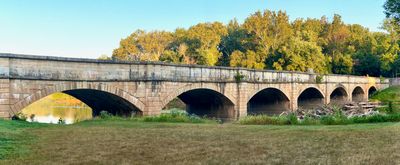
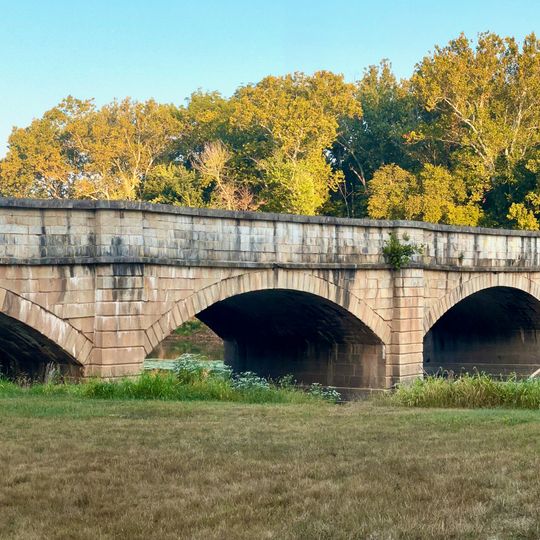
Monocacy Aqueduct is a seven-arch stone structure in Frederick County, Maryland, that carries the towpath and canal channel of the Chesapeake and Ohio Canal over the Monocacy River. The arches are built from granite blocks, and the structure sits low above the river, making the water visible from the walkway on top.
The aqueduct was finished in 1833 as one of the largest stone crossings along the Chesapeake and Ohio Canal. During the Civil War, canal workers talked military commanders out of destroying it, which kept the structure standing.
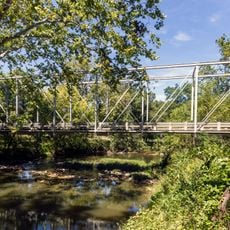
The name Monocacy comes from a Lenape word thought to mean "stream with many bends," reflecting the river's winding path below the structure. Visitors walking across the aqueduct today can look down and see the river curving through the landscape just as the name describes.
The aqueduct is part of the Chesapeake and Ohio Canal National Historical Park, with parking available nearby and a short trail leading to the structure. The path is unpaved and can be uneven, so sturdy footwear makes the walk more comfortable.
The Monocacy Aqueduct is the longest surviving aqueduct along the entire Chesapeake and Ohio Canal, even though the canal once had eleven of them. At around 330 feet (about 100 meters) long, it stands out among all the canal's stone crossings.
The community of curious travelers
AroundUs brings together thousands of curated places, local tips, and hidden gems, enriched daily by 91,721 contributors worldwide.