Pierre Shale, Geological formation in South Dakota and North Dakota, United States and Alberta, Canada
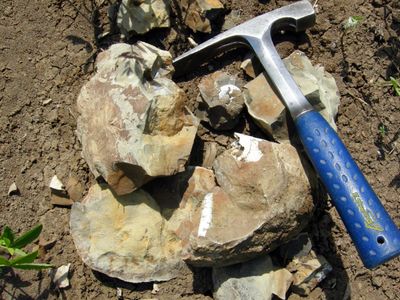
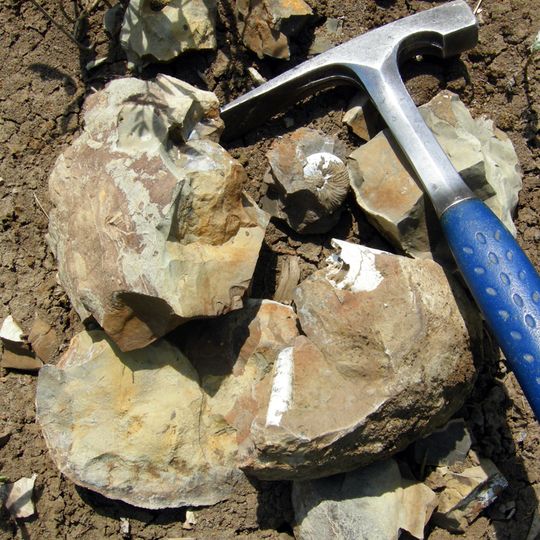
Pierre Shale is a geological formation made of gray and olive-colored shale that runs across parts of South Dakota, North Dakota, and into Alberta in Canada. Where the rock breaks through the surface, alternating layers of siltstone and sandstone create visible bands in the exposed cliffs and hillsides.
The formation was first described in 1862 by geologists F.B. Meek and F.V. Hayden, who called it Formation No. 5 in their early surveys of the region. The name was later changed to reflect its connection to the city of Pierre and to set it apart from other nearby rock units.
The name comes from the city of Pierre in South Dakota, where these rock layers are especially visible at the surface. The exposed outcrops draw fossil hunters and geology enthusiasts who come specifically to look for marine remains in the gray stone.
The layers are easiest to see where the rock is exposed at the surface along roadsides, river banks, or open hillsides, without needing a long walk. Going with someone who knows the local geology helps you make sense of the different bands and what they tell you about the ground beneath.
These rock layers formed at the bottom of a shallow inland sea that covered much of central North America around 70 million years ago. Because of this, the gray stone sometimes contains fossils of marine reptiles and shellfish, which visitors occasionally spot directly in exposed outcrops.
The community of curious travelers
AroundUs brings together thousands of curated places, local tips, and hidden gems, enriched daily by 91,385 contributors worldwide.