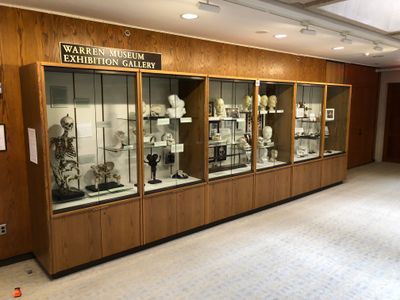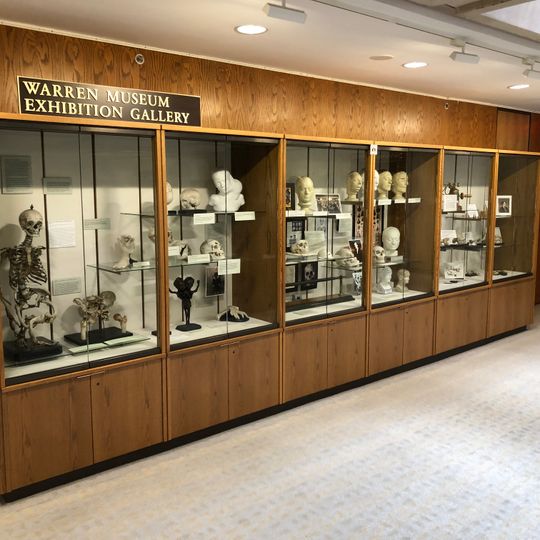
Warren Anatomical Museum, Anatomical museum at Harvard Medical School in Boston, United States.
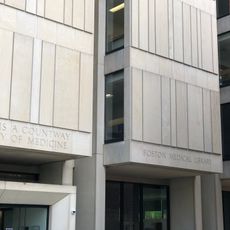
The Warren Anatomical Museum is a collection of medical specimens housed at Harvard Medical School in Boston. It holds around 15,000 preserved human tissues and organs that demonstrate diseases, injuries, and anatomical variations, stored carefully in the Countway Library of Medicine.
John Collins Warren, a leading Harvard surgeon and professor, established the museum in 1847 by donating his personal collection of 160 specimens to the medical school. The collection expanded throughout the 1800s as physicians and students contributed additional specimens and observations to document medical knowledge of that era.
The collection reflects how medical professionals in the 1800s studied and taught the human body through real specimens rather than drawings or theories. These preserved materials shaped how doctors learned medicine and developed new surgical approaches that are still taught today.
The collection is not freely open to the general public but is available to researchers and medical students by appointment. Those interested in visiting should contact Harvard Medical School directly to arrange a tour of the specimens stored at the Countway Library.
The museum holds the skull and iron rod of Phineas Gage, a man who survived a severe head injury in 1848 when an iron tamping rod pierced his skull. This case became a turning point in neurology and demonstrates how one medical observation helped transform our understanding of how the brain works.
The community of curious travelers
AroundUs brings together thousands of curated places, local tips, and hidden gems, enriched daily by 91,262 contributors worldwide.