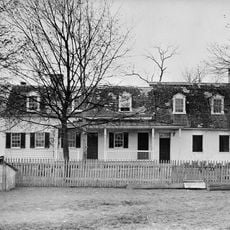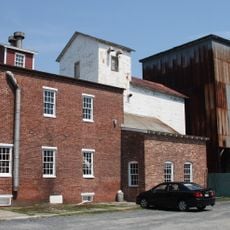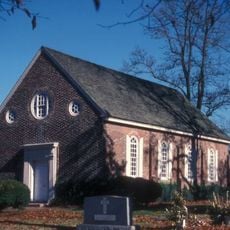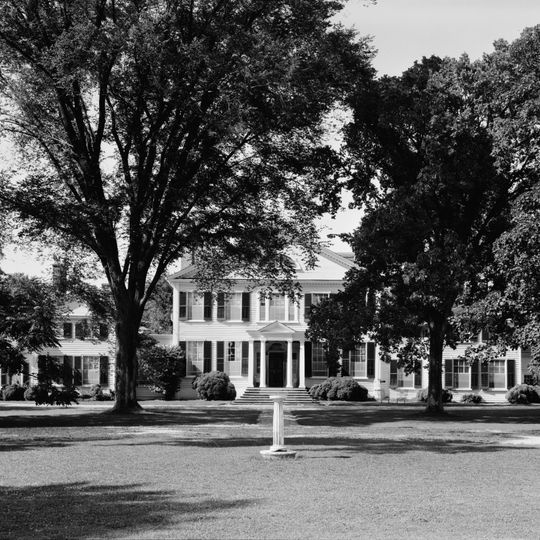
Wye House, Former plantation estate in Talbot County, Maryland.
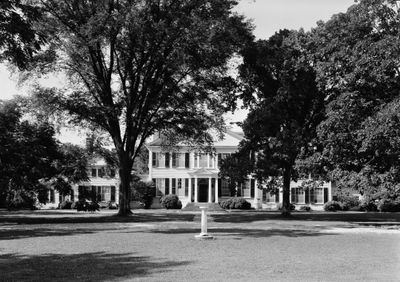
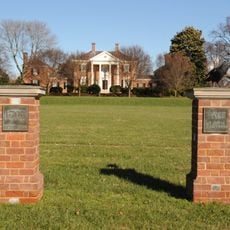
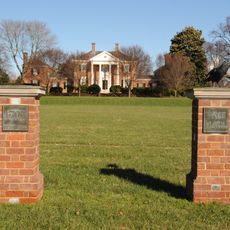
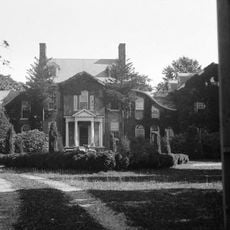
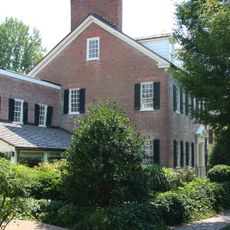
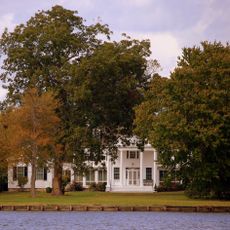
Wye House is a former plantation estate featuring a one-story Palladian portico and symmetrical gardens that reflect the architectural tastes of the late eighteenth-century Chesapeake region. The layout displays the formal design preferences typical of major landed properties in the area.
Edward Lloyd founded the plantation in the 1650s, which grew into one of the region's largest landed properties. The estate remained a major plantation for generations, sustained by enslaved labor throughout its history.
Frederick Douglass recorded his experience as an enslaved child at this estate in his autobiography, offering firsthand accounts of plantation life. His writings reveal the daily realities faced by the enslaved people who lived and worked there.
Visitors can observe ongoing archaeological work that uncovers artifacts revealing daily life on the estate for both the owning family and enslaved people. On-site materials explain the findings and what they tell about life at the property.
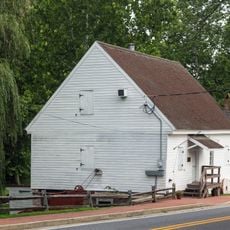
The property contains the only surviving eighteenth-century greenhouse in the country, still equipped with its original heating system. This rare building demonstrates the technical knowledge needed to grow citrus fruits in the region's cooler climate.
The community of curious travelers
AroundUs brings together thousands of curated places, local tips, and hidden gems, enriched daily by 91,357 contributors worldwide.