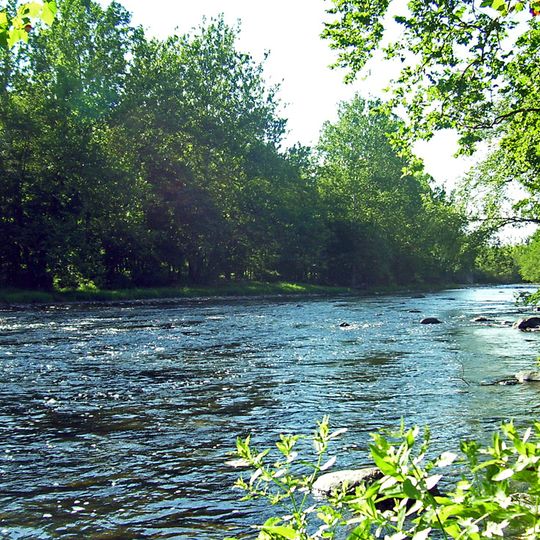
Neversink River, Tributary river in Sullivan County, New York.
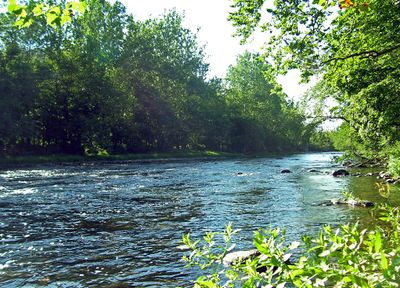
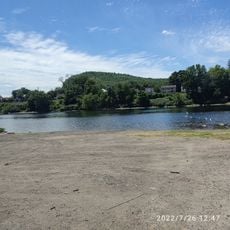
The Neversink River is a mountain stream in southeastern New York that runs through forested hills and rocky ground before joining the Delaware River. Its course shifts between calmer stretches and faster, rock-lined sections as it moves through several counties.
The river was a key feature in the construction of the Delaware and Hudson Canal in the 1800s, which opened the region to coal transport. A stone aqueduct built to carry the canal across the water was one of the major engineering works of that era.
The Neversink River is widely seen as the birthplace of American dry-fly fishing, a technique that Theodore Gordon refined here in the late 1800s. Anglers still come to fish these waters today, often using methods directly inspired by his approach.
The river can be reached at several points, with the areas near Port Jervis being among the most accessible. Late spring and summer tend to offer the best conditions for walking along the banks or fishing.
Part of the river valley was permanently flooded in the 1950s to create the Neversink Reservoir, which supplies drinking water to New York City. Several small communities were displaced in the process, and locals still talk about the villages that now lie underwater.
The community of curious travelers
AroundUs brings together thousands of curated places, local tips, and hidden gems, enriched daily by 92,424 contributors worldwide.