Juan de Fuca Ridge, Undersea ridge in Pacific Ocean, Canada
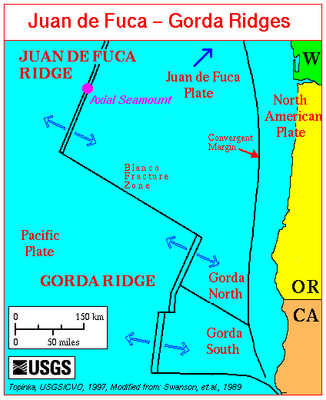
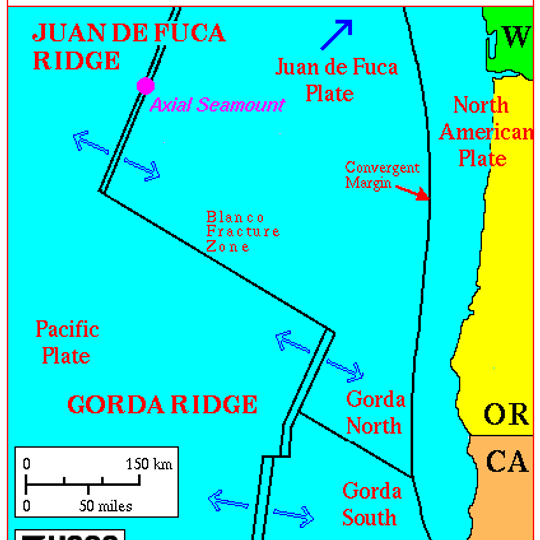
The Juan de Fuca Ridge is an undersea mountain range in the Pacific Ocean along the northwestern coast of North America. It was formed by the spreading movement of two tectonic plates and continues to shape the seafloor through ongoing geological activity.
The ridge was discovered in 1874 when the ship USS Tuscarora was surveying potential routes for an underwater telegraph cable. This finding opened new understanding of how the seafloor beneath the Pacific was shaped and continues to change.
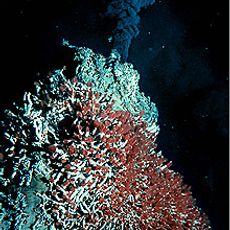
Scientists from multiple research institutions study the ridge's hydrothermal vents and their impact on marine life adaptation in extreme environments.
The ridge lies several hundred meters below the ocean surface and is not accessible to regular visitors. Scientists study it using specialized underwater equipment and monitoring systems.
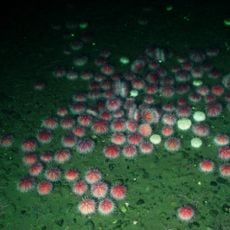
The Axial Seamount on the ridge is one of the most active underwater volcanoes in the northeastern Pacific. At this site, hydrothermal vents create conditions where unusual forms of life survive in the deep ocean darkness.
The community of curious travelers
AroundUs brings together thousands of curated places, local tips, and hidden gems, enriched daily by 91,005 contributors worldwide.